
Bengali Lunch for Weight Loss: Eat Your Favourite Bengali Food Without Giving Up Rice
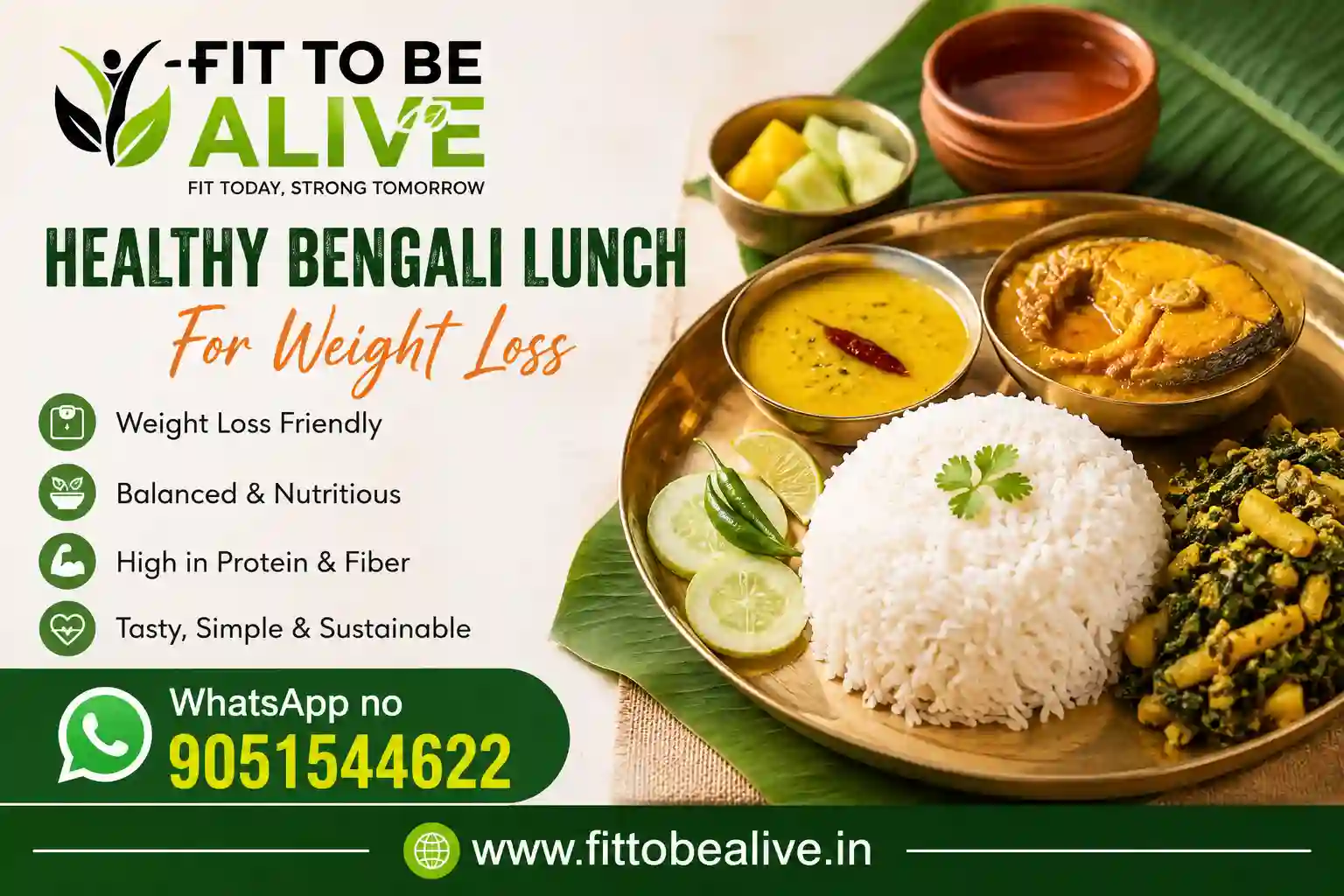
Quick answer: A Bengali lunch can absolutely be part of a weight-loss diet. You do not need to completely stop eating rice, fish, dal, or traditional Bengali vegetables. The key is to build a balanced plate with a sensible portion of rice, enough protein, plenty of vegetables, and controlled amounts of oil, fried foods, sweets, and calorie-dense sides. A simple Bengali weight-loss lunch can include rice, dal, seasonal vegetables and lightly cooked fish or another protein source.
If your goal is sustainable weight loss, the best Bengali lunch is not the one that feels like a strict diet. It is the one you can comfortably eat again and again while managing portions and overall calorie intake.
Traditional Bengali meals already offer many useful ingredients for a balanced plate. Rice is a staple, while fish, lentils and vegetables are common parts of Bengali cooking.
Can Bengali Food Help With Weight Loss?
Yes—but the way the meal is prepared and portioned matters.
A traditional Bengali lunch can contain rice, dal, vegetables, fish, chutney and sometimes sweets. That variety can be useful, but a large serving of rice combined with fried vegetables, oily curries and sweets can make the meal much more calorie-dense than you realise.
The goal is therefore not to eliminate Bengali food.
The goal is to make your usual Bengali lunch more balanced.
Instead of asking, “Should I stop eating rice to lose weight?”, ask:
“How can I make my rice-based lunch more filling and balanced?”
That small change in thinking makes a weight-loss diet much easier to maintain.
What Should a Bengali Weight-Loss Lunch Plate Look Like?
A practical plate can be built around four components:
1. A controlled portion of rice
Rice can remain on your plate.
The important factor is portion size. Rather than automatically taking a large serving of bhaat and then adding multiple calorie-dense sides, start with a moderate portion and build the rest of the meal around vegetables and protein.
If you enjoy rice every day, there is usually no reason to make your diet unnecessarily difficult by banning it.
2. A good source of protein
Protein helps make a meal more satisfying and is important for maintaining muscle while you work toward fat loss.
For a Bengali lunch, suitable options can include:
Fish
Eggs
Dal
Chicken
Prawns
Other appropriate protein sources based on your dietary preferences
Fish is particularly convenient for Bengali meals because it naturally fits the cuisine. Traditional Bengali food commonly combines rice with fish, lentils and vegetables.
3. Plenty of vegetables
Vegetables can make a rice-based lunch more filling without relying entirely on additional rice.
Choose seasonal Bengali vegetables such as:
Lau
Jhinge
Potol
Begun
Dhokar vegetables
Cabbage
Cauliflower
Spinach and other leafy greens
Beans
Uchhe or bitter gourd
Mixed vegetables
Prefer preparations that are steamed, boiled, lightly sautéed or cooked with a controlled amount of oil rather than deep-fried.
4. Controlled cooking oil
Mustard oil is an important part of Bengali cooking, but “traditional” does not automatically mean “unlimited.”
Oil is calorie-dense, so the amount used during cooking can make a significant difference to the total energy content of your meal.
You do not have to remove mustard oil from Bengali food.
Instead, focus on using an appropriate quantity.
Best Bengali Lunch Foods for Weight Loss
Fish with rice and vegetables
A simple combination of rice, fish curry and vegetables can be an excellent everyday lunch.
Choose a lighter fish preparation more often instead of making fried fish the default.
Rohu, katla and other commonly eaten fish can fit into a balanced diet. For richer fish such as hilsa, portion size and cooking method become particularly important.
For example, hilsa is naturally rich in fat, and deep-frying or using excessive oil can substantially increase the energy density of the meal.
Dal with vegetables
Dal is another useful part of a Bengali lunch.
A bowl of dal can provide protein and contributes to the overall nutritional value of the meal. Pairing dal with vegetables makes a simple rice-based lunch more balanced.
Instead of thinking of dal as an optional side, make it a regular part of your lunch.
Shukto and seasonal vegetables
Traditional Bengali cuisine includes a wide range of vegetable preparations.
Shukto, for example, is traditionally made with several vegetables and is part of the classic Bengali meal sequence.
For weight loss, however, preparation matters.
A vegetable dish cooked with a modest amount of oil is generally a better everyday choice than a heavily fried preparation.
Eggs when you want a simple option
Eggs can be useful when you want an affordable and convenient protein source.
Try pairing an egg curry or boiled eggs with a moderate amount of rice, dal and vegetables instead of relying on rice alone.
What About Rice? Do You Need to Stop Eating Bhaat?
No.
This is one of the biggest misconceptions around a Bengali weight-loss diet.
Rice provides carbohydrate and can be part of a balanced meal. The issue is usually not that rice is inherently “bad”; it is that portions can become much larger than needed, particularly when the rest of the meal is also calorie-dense.
If you currently eat several servings of rice, reducing the portion gradually may be more sustainable than eliminating it overnight.
A useful strategy is:
Moderate rice + more vegetables + adequate protein + controlled oil.
You can also experiment with different rice varieties and choose options that suit your preferences and nutritional needs.
The ICMR-NIN Dietary Guidelines emphasise dietary variety and include cereals, pulses, vegetables, fruits, nuts/seeds and other food groups as components of a balanced dietary pattern.
Bengali Foods to Limit More Often During Weight Loss
You don’t need a “never eat” list.
Instead, identify foods that are easy to overeat.
Fried foods
Begun bhaja, aloo bhaja, fish fry and other fried foods can be delicious, but frequent or large portions can add substantial calories to your lunch.
You can still enjoy them occasionally.
For everyday meals, choose lighter cooking methods more often.
Luchi
Luchi is traditionally deep-fried, which makes it much easier for a lunch to become calorie-heavy.
If weight loss is your priority, rice with vegetables, dal and protein may be easier to portion and balance as an everyday lunch.
Large amounts of potato
Potato does not have to be eliminated.
However, a meal containing a large quantity of potato, rice and oil can become heavily carbohydrate- and calorie-focused while providing less protein and vegetable volume.
Use potato as part of the meal rather than allowing it to dominate the plate.
Sweets after lunch
Rosogolla, sandesh, mishti doi and other Bengali sweets are part of the culture and can absolutely have a place in a flexible diet.
But daily sweets after an already substantial lunch can make maintaining a calorie deficit difficult.
Enjoy them intentionally rather than automatically.
5 Easy Bengali Lunch Ideas for Weight Loss
Lunch idea 1: Everyday fish lunch
Moderate portion of rice
Masoor or moong dal
One serving of seasonal vegetables
One portion of lightly cooked fish
Salad or additional vegetables if desired
Lunch idea 2: High-vegetable Bengali lunch
Moderate rice
Dal
Lau/jhinge/potol or mixed vegetables
One egg or another protein source
Lunch idea 3: Simple chicken lunch
Moderate rice
Dal
Seasonal vegetables
Light chicken curry
Minimal fried sides
Lunch idea 4: Vegetarian Bengali lunch
Rice
Dal
Two vegetable preparations
A suitable plant-based protein source
Lunch idea 5: Busy-day lunch
Pre-portioned rice
Ready-to-eat dal
Boiled eggs or cooked fish
Quickly prepared vegetables
The best lunch plan is one that works with your schedule instead of requiring complicated recipes every day.
How to Make Your Bengali Lunch More Filling
If you are hungry again shortly after lunch, simply cutting more food may not be the best solution.
Instead, look at the composition of the meal.
Ask yourself:
Is there enough protein?
Add fish, eggs, dal, chicken or another suitable protein source.
Are vegetables taking up enough space?
Increase the vegetable component before automatically increasing the rice.
Am I eating too quickly?
Eating slowly can make it easier to notice fullness and avoid automatically going back for another serving.
Am I drinking calories with lunch?
Sweetened drinks can add calories without providing the same fullness as whole foods.
Water is usually the simplest everyday choice.
A Simple Bengali Weight-Loss Lunch Formula
If you don’t want to count every calorie, start with this simple formula:
Rice + protein + vegetables + dal + controlled oil
Then adjust the portions according to your individual calorie and nutrition requirements.
For example:
Bhaat + mach + dal + lau/potol/shak + water
That can be a much more practical starting point than a restrictive diet built around foods you don’t normally eat.
Why Portion Control Matters More Than Food Fear
Weight loss ultimately depends on your overall energy balance, but that does not mean you need to turn every meal into a mathematical exercise.
Portion awareness can be enough for many people to begin making useful changes.
Consider the difference between:
Large rice portion + fried vegetables + oily fish curry + sweets
and:
Moderate rice + dal + vegetables + fish + occasional sweet
Both can be recognisably Bengali meals.
But the second version is easier to structure around a weight-loss goal.
This is why a sustainable Bengali diet should focus on portion, preparation and balance, rather than declaring individual traditional foods completely forbidden.
Bengali Lunch for Weight Loss: The Bottom Line
A Bengali lunch does not have to disappear from your diet just because you want to lose weight.
You can continue enjoying rice, fish, dal and seasonal vegetables while making a few practical changes:
Keep rice portions moderate.
Include a protein source at lunch.
Eat more seasonal vegetables.
Use cooking oil thoughtfully.
Choose fried foods less frequently.
Keep sweets and calorie-dense extras occasional.
Avoid turning every meal into a “cheat meal.”
Focus on consistency rather than perfection.
The most effective Bengali lunch for weight loss is not necessarily the smallest lunch.
It is a balanced, satisfying meal that you can repeat consistently while fitting into your overall nutrition and calorie needs.
Want a Bengali Weight-Loss Plan That Fits Your Lifestyle?
If you are tired of generic diet charts that tell you to give up rice, traditional food and everything you actually enjoy, you need a more practical approach.
At Fit To Be Alive, the focus is on helping you build healthier habits that can work with your lifestyle, food preferences and fitness goals.
Instead of following a random internet diet, you can work toward a structured approach to food, exercise and sustainable weight management.
Start With Your Everyday Food
Your weight-loss journey does not need to begin with an extreme diet tomorrow morning.
It can begin with your next Bengali lunch.
Keep the rice portion sensible. Add vegetables. Include protein. Control the oil. Enjoy your food—and build consistency one meal at a time.
Ready to make your Bengali food work with your weight-loss goal? Explore Fit To Be Alive and take the next step toward a healthier, more sustainable routine.
