Healthy Office Snacks for Weight Loss: Practical Choices That Actually Fit a Working Day
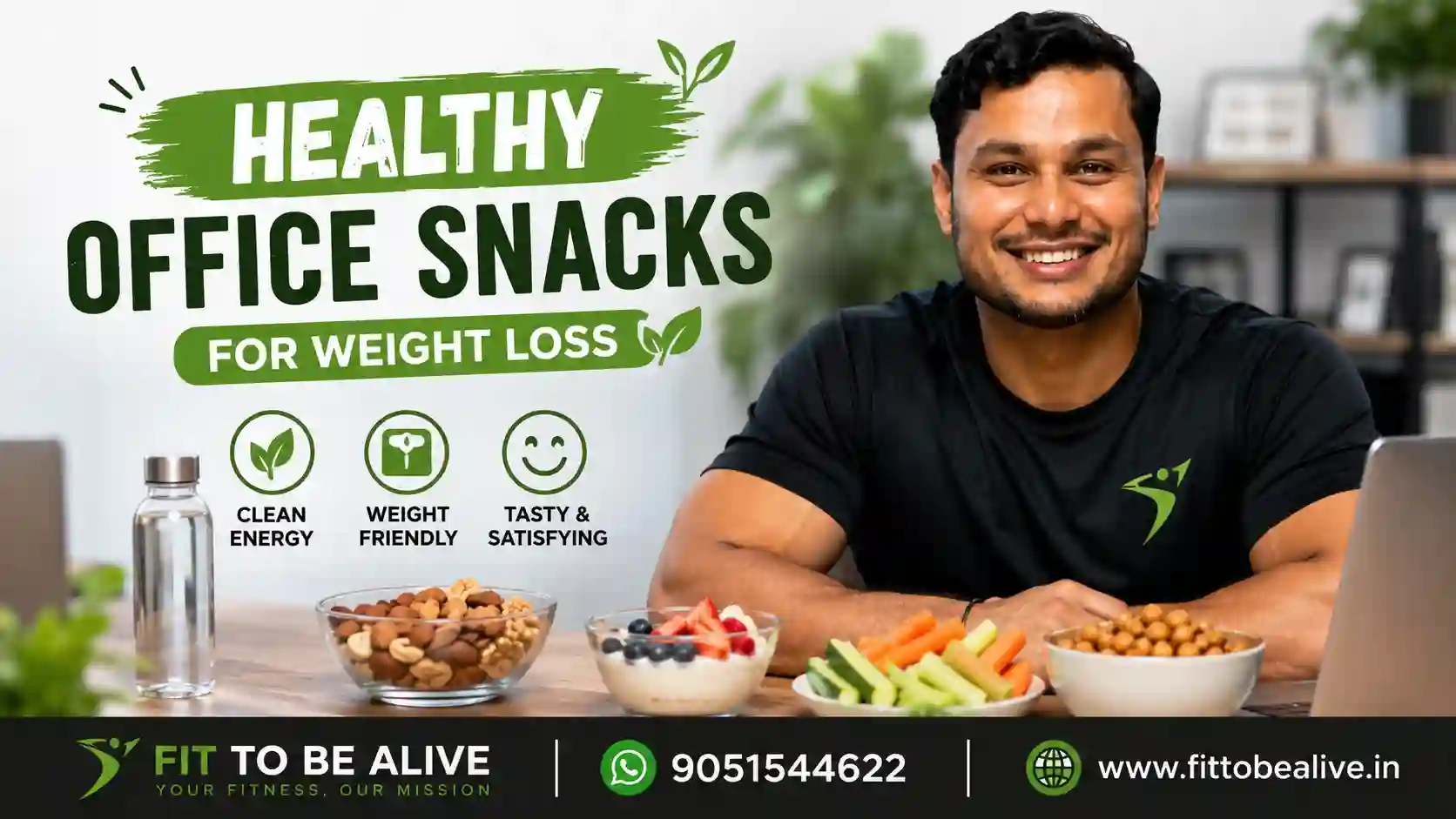
Quick answer: The best healthy office snacks for weight loss are simple, filling foods that help you manage hunger without turning a small snack into another full meal. Good options include fruit with nuts or peanut butter, plain yogurt with fruit, roasted chickpeas, boiled eggs, vegetables with hummus, and other minimally processed foods containing protein, fiber, or both. The right portion depends on your overall diet, hunger, activity and goals.
If you sit at a desk for several hours, attend meetings, deal with deadlines, and still want to lose body fat, your office snack choices can make your routine easier. Office snacks for weight loss.
But I want to make one thing clear from the beginning: there is no magic “weight-loss snack.”
A snack is simply one part of your overall eating pattern.
As a certified fitness coach, I often see people looking for the perfect food when the bigger issue is consistency. They may eat very strictly for a few days, become extremely hungry at work, grab whatever is available, and then feel that their entire weight-loss plan has failed.
I prefer a more practical approach.
The goal is to build a routine you can actually repeat.
For people working around Rajarhat, New Town and Kolkata, this can be especially useful because office schedules, commuting, meetings and eating outside can make structured eating difficult. You do not need a complicated diet to start making better choices.
What Makes a Good Office Snack for Weight Loss?
A useful office snack should solve a problem.
Usually, that problem is hunger between meals, low energy, poor planning, or the temptation to eat whatever happens to be available Office snacks for weight loss.
I generally look for four things:
1. It should be reasonably filling
Foods containing protein, fiber and/or a high water content can make a snack more satisfying. Harvard’s Nutrition Source notes that snacks containing whole foods with protein, fiber and whole grains can improve satisfaction.
2. It should fit your overall calorie intake
Even nutritious foods contain calories. Nuts, seeds, peanut butter and similar foods can be excellent choices, but portion size still matters if your goal involves reducing body fat.
Weight loss generally requires an energy deficit over time. Physical activity increases energy expenditure, while reducing calorie intake can contribute to creating that deficit.
3. It should be convenient
If your snack requires 30 minutes of preparation every morning, you may stop preparing it after a few days.
A good office snack should be something you can realistically carry, store or buy.
4. You should actually like eating it
A technically “healthy” snack that you dislike is not a sustainable solution.
Your food choices need to work with your lifestyle.
15 Healthy Office Snacks for Weight Loss
Here are practical options you can rotate rather than eating the same thing every day.
Fruit + a small portion of nuts
An apple, guava, orange or another whole fruit can be paired with a small portion of nuts.
This combination gives you carbohydrates from the fruit plus protein, fat and fiber from nuts.
The important point is the portion. Nuts are nutritious but energy-dense, so eating directly from a large packet can make portion control difficult.
Plain yogurt + fruit
Plain yogurt with chopped fruit can be an easy office snack if refrigeration is available.
Choose an unsweetened option when possible and add fruit yourself.
Boiled eggs
Boiled eggs are convenient sources of protein and can work well when you need something more substantial than fruit.
Keep food-safety and refrigeration requirements in mind, especially if you carry eggs to work.
Roasted chickpeas
Roasted chickpeas can provide a convenient combination of carbohydrates, protein and fiber.
They are also easier to carry than many fresh foods.
Watch heavily salted or heavily coated versions if you are eating them frequently.
Vegetables + hummus
Carrot, cucumber, bell pepper or other vegetables can be paired with hummus.
This is particularly useful if you want something crunchy while working.
Fruit + peanut butter
An apple or another fruit with a small amount of peanut butter can be satisfying.
Look at the ingredient list when buying peanut butter. Products can differ considerably in added sugar, salt and other ingredients.
Cottage cheese or paneer in a suitable portion
For people who eat dairy, cottage cheese or a modest portion of paneer can provide protein.
The total portion and preparation method matter because calorie content can vary.
Unsalted nuts
Almonds, walnuts and other nuts can be convenient desk snacks.
Pre-portion them rather than keeping a large container beside your computer.
Seeds
Pumpkin seeds, sunflower seeds and similar seeds can be useful additions to an office snack.
Again, portion control matters.
Whole-grain crackers + a protein-rich topping
Whole-grain crackers can be combined with something such as hummus, yogurt-based spread or another suitable protein-containing food.
Check the nutrition label because “whole grain” on the front of a package does not automatically mean the product is ideal for your particular goal.
Homemade popcorn
Plain or lightly seasoned popcorn can be a practical snack when you want volume and crunch.
The preparation matters. Large amounts of butter, oil, sugar or other toppings can substantially change the calorie content.
Sprouts chaat
A simple sprouts-based snack with vegetables, lemon and appropriate seasoning can work well for an Indian office routine.
Keep the preparation hygienic and use ingredients that you can safely store.
Roasted makhana
Makhana can be convenient and easy to carry.
However, don’t assume that “healthy” means unlimited. Oil, ghee and portion size still contribute to total calorie intake.
Homemade snack box
If you prefer structure, prepare a small snack box containing a combination such as:
-
One whole fruit
-
A small portion of nuts or seeds
-
A protein-containing food
This can reduce the chance of making an impulsive choice when hunger arrives.
Leftovers from a balanced meal
Sometimes the best office snack is not a packaged snack at all.
If you have a small portion of a balanced meal available, you may not need a separate “diet snack.”
The objective is not to eat diet-branded foods. The objective is to manage your overall eating pattern.
The Simple Office Snack Framework I Use
Instead of memorising 50 snack ideas, use a framework.
Step 1: Ask yourself whether you are actually hungry
Before eating, pause for a moment.
Ask:
“Am I physically hungry, or am I eating because I am bored, stressed, tired or simply because food is available?”
This does not mean emotional eating is a personal failure. It means identifying the trigger gives you more options.
Harvard’s Nutrition Source similarly recommends considering when and why you snack rather than treating every snack opportunity as a hunger signal.
Step 2: Choose your food category
If you are genuinely hungry, build the snack around one or more of these:
Protein: eggs, yogurt, paneer, chickpeas, nuts or seeds.
Fiber-rich foods: fruit, vegetables, legumes and whole grains.
Volume and hydration: vegetables and whole fruits can help make a snack more satisfying.
Step 3: Control the portion
You don’t need to fear food.
You need to understand your portion.
A handful of nuts may be appropriate for one person but excessive for another depending on their total diet and energy requirements.
Step 4: Make the choice before you’re extremely hungry
This is one of the biggest practical lessons I see with clients.
When you wait until you are extremely hungry, decision-making becomes harder.
Preparation gives you an advantage.
What I Would Keep at an Office Desk
If I were setting up a basic office snack system, I would separate foods into three groups.
Desk-friendly foods
These can usually be stored more easily:
-
Nuts
-
Seeds
-
Roasted chickpeas
-
Plain popcorn
-
Whole-grain crackers
-
Certain whole fruits
Refrigerator options
If your workplace has a refrigerator:
-
Plain yogurt
-
Boiled eggs
-
Cut vegetables
-
Cottage cheese
-
Paneer
-
Hummus
Emergency options
Keep one or two shelf-stable choices available for days when your schedule becomes unpredictable.
This is important because your plan should survive a bad workday.
Office Snacks That Can Quietly Derail Your Goal
You don’t need to label foods as “bad.”
Instead, understand which foods are easy to overeat.
Biscuits with tea
A few biscuits can quickly become several, particularly when you’re distracted by work.
The issue isn’t that one biscuit destroys your progress. The issue is repeated automatic eating.
Sugary drinks
Sweetened tea, coffee, soft drinks and other sugary beverages can add calories without providing the same satisfaction as a more substantial snack. Replacing sugary drinks with water can reduce calorie intake.
Chips and fried snacks
Chips, namkeen and fried snacks can be very easy to eat in large portions.
If you enjoy them occasionally, you do not necessarily need to ban them. But making them your default office snack may make calorie control harder.
“Healthy” packaged snacks
Protein bars, granola products, flavoured nuts and similar foods can sometimes be useful.
But marketing language is not a substitute for reading the nutrition label.
Check the serving size and ingredients.
A Simple 5-Day Office Snack Plan
You can use this as a starting framework rather than a rigid diet.
Monday
Fruit + small portion of nuts
Simple, portable and easy to prepare.
Tuesday
Plain yogurt + fruit
Useful when refrigeration is available.
Wednesday
Boiled eggs + cucumber
A practical protein-focused option.
Thursday
Roasted chickpeas + fruit
Good for people who prefer a shelf-stable snack.
Friday
Vegetables + hummus
A different texture and flavour can make the routine easier to maintain.
The best plan is the one you can continue next week.
Do You Need Snacks to Lose Weight?
No.
This is an important point.
Some people genuinely feel hungry between meals. For them, a planned snack may make their diet easier to follow.
Other people are comfortable eating three meals without snacks.
Neither approach is automatically superior.
The purpose of a snack is to support your overall eating pattern—not to create another mandatory meal.
Harvard’s review of snacking also points out that snacks can have different effects depending on what, why and how much a person eats.
Healthy Snacks Are Only One Part of Fat Loss
This is where I want to bring my coaching experience into the conversation.
I don’t approach weight loss as simply “eat this food and lose weight.”
My approach is body composition and sustainable progress.
Food matters, but so does movement, resistance training, cardiovascular fitness, recovery, sleep and consistency.
Current CDC guidance recommends that adults generally aim for at least 150 minutes of moderate-intensity aerobic activity per week and muscle-strengthening activity on at least two days per week, although individual needs can vary.
I also work with the five essential components of fitness in my general fitness training.
The goal is not to create a temporary version of yourself.
The goal is to build a fitness lifestyle that you can maintain.
My Practical Lesson From Coaching Beginners
One of the most common mistakes I see is inconsistency with the goal.
Someone starts with motivation.
They follow everything perfectly for several days.
Then work gets busy.
Sleep changes.
A social event happens.
The planned meals disappear.
Then the person thinks:
“I failed.”
I don’t see it that way.
You need a system that can handle real life.
That is why I prefer practical habits over extreme rules.
If your office snack is prepared before you become hungry, you have already solved one problem.
If you know what you are going to eat when colleagues order snacks, you have solved another.
If you miss one workout, you return to your routine instead of abandoning the entire week.
That is how consistency is built.
A Realistic Weight-Loss Mindset for Office Workers
Transformation starts with behaviour.
You don’t need to become perfect overnight.
You need to become more consistent.
I tell clients that if they are genuinely serious about their transformation, yes, results are possible—but I am there to make the journey easier and more practical, not to promise an identical result or timeline for everyone.
Weight management is affected by many factors, including food intake, activity, sleep, stress, medications, medical conditions, genetics and environment.
That is why I prefer realistic goals and sustainable habits.
Healthy Office Snacks for Weight Loss: The Bottom Line
If you remember only one framework from this page, remember this:
Plan → Protein/Fiber → Portion → Consistency
Plan your snack before hunger becomes overwhelming.
Choose foods that provide useful nutrition, particularly protein and/or fiber.
Keep the portion appropriate for your overall eating plan.
Then repeat the process consistently.
You don’t need an expensive diet product.
You don’t need a perfect meal plan.
And you don’t need to eliminate every food you enjoy.
You need a routine that works with your actual life.
For working professionals in Rajarhat, New Town and the surrounding Kolkata area, that may mean preparing your office snack the night before, carrying food from home, choosing a smarter option from what’s available at work, and combining those habits with a sensible fitness routine.
Want Help Building a Sustainable Fitness Routine?
I am Raj Das, a Certified Fitness Coach with 2+ years of experience in the fitness industry, based around Rajarhat, New Town, Kolkata.
I train beginners under the general fitness category and work with adults aged 18–50, both men and women. My training approach covers the five essential components of fitness, and I can also guide clients toward a specific general-fitness goal.
My philosophy is simple:
You don’t need to make fitness complicated. You need a system you can follow.
If your goal is improving your general fitness, reducing body fat and building a sustainable fitness lifestyle, I can help you structure the process around your current level and practical day-to-day routine.
Important scope of my coaching
At present, my training service is focused on general fitness for adults aged 18–50.
I am not currently trained to provide specialised programming for special populations, including older adults, pregnant individuals, people with chronic health conditions or people with disabilities who may require specialised exercise programming, additional supervision or medical clearance.
I plan to begin formal education in Special Populations training and Nutrition in March 2027. Until then, I prefer to stay within my current qualifications and refer situations outside my scope to an appropriately qualified professional.
That boundary is important to me because good coaching is not about pretending to know everything.
It is about knowing what you can safely help with—and when someone needs a different professional.
Frequently Asked Questions
What are the best healthy office snacks for weight loss?
Good options include whole fruit, plain yogurt with fruit, boiled eggs, roasted chickpeas, vegetables with hummus, nuts in controlled portions, seeds and other minimally processed foods that fit your overall eating plan.
Is eating snacks good for weight loss?
Snacking is neither automatically good nor bad for weight loss. It depends on your hunger, food choices, portions and total daily intake. Some people benefit from planned snacks, while others do not need them.
Can I eat fruit while trying to lose weight?
Yes. Whole fruit can fit into a healthy eating pattern for weight management. The important consideration is your overall dietary pattern and energy intake, not simply whether a food is labelled as a “weight-loss food.”
Are nuts good for weight loss?
Nuts can be part of a healthy diet, but portions matter because they are relatively energy-dense. Pre-portioning them can make them easier to include without unintentionally eating a large amount.
What should I eat with tea at the office?
If you are hungry, consider pairing tea with something more satisfying than automatically reaching for biscuits—for example, fruit with a small portion of nuts, plain yogurt, roasted chickpeas or another suitable snack.
Do I need snacks if I already eat three meals?
Not necessarily. If your meals keep you satisfied and your overall eating pattern supports your goal, you may not need snacks.
Can office snacks alone help me lose belly fat?
No single snack specifically targets belly fat. Reducing body fat generally involves managing overall energy balance alongside appropriate physical activity and sustainable lifestyle habits.
How can I stop eating office junk food?
Start with preparation rather than relying only on willpower. Keep practical alternatives available, identify when you usually become hungry, and decide beforehand what you will eat. One of the biggest advantages of planning is removing the need to make a difficult decision when you are already very hungry.
Final Takeaway
Healthy office snacks for weight loss are not about finding a miracle food.
They are about making the next good decision easier.
Choose a practical snack.
Keep the portion sensible.
Prioritise nutritious foods.
Prepare before hunger becomes extreme.
Then focus on the bigger picture: consistent eating habits, regular physical activity, strength training, recovery and a lifestyle you can maintain.
That is the approach I believe in as a fitness coach.
Small decisions repeated consistently can become a fitness lifestyle.
