
Dal for Weight Loss: My Practical Approach to Making It Work
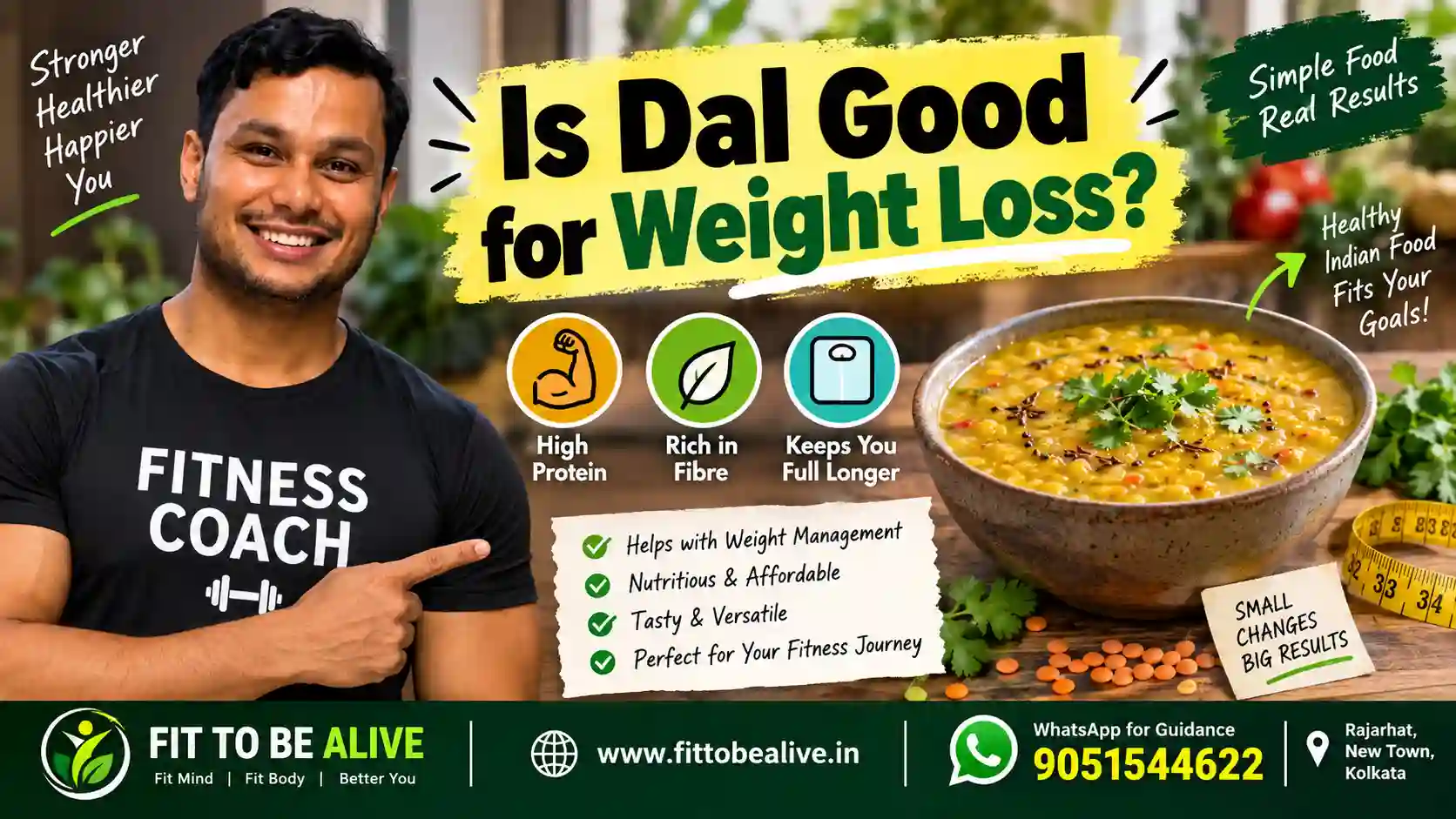
If you are trying to lose weight and regularly eat Indian food, you may have asked yourself: Is dal good for weight loss?
My practical answer as a fitness coach is yes, dal can be a very useful food for weight loss—but dal alone does not cause weight loss.
This is something I explain to beginners and clients who want a sustainable transformation. Many people start searching for one “fat-burning” food or completely remove rice, roti, or other familiar foods from their diet. In my experience, this approach often becomes difficult to maintain.
For sustainable results, I prefer to think about body composition, daily habits, training, food quality, portion awareness, and consistency.
Dal can fit well into that framework.
Pulses and lentils provide protein and fibre and can be filling as part of a balanced meal. Research and established nutrition guidance support including pulses as part of healthy eating patterns, while weight management still depends on the overall amount and pattern of food you eat.
I am Raj Das, a Certified Fitness Coach with more than two years of experience in the fitness industry. I work with adults in and around Rajarhat, New Town, Kolkata, and my approach to general fitness includes the five essential components of fitness.
One of the most common questions I hear is:
“Will I actually get results?”
My answer is straightforward: if you are serious about your transformation and consistent with the process, then yes, you can make meaningful progress.
My role is to help make the journey easier by using practical fitness experience, realistic habits, and an approach that people can continue instead of following extreme plans.
Quick Summary: Dal for Weight Loss
-
Dal can support a weight-loss diet because it provides plant protein and fibre.
-
Dal is not a magic fat-loss food. Your overall food intake, activity, training, sleep, and consistency still matter.
-
A useful meal structure can include dal + vegetables + a sensible portion of rice or roti + another appropriate protein source when needed.
-
Adding large amounts of ghee, oil, cream, fried toppings, or oversized portions can significantly change the calorie content of a dal meal.
-
For sustainable results, I focus more on improving body composition and building a fitness lifestyle than simply trying to reduce body weight quickly.
-
Beginners often make one major mistake: they are not consistent with their goal long enough to allow the process to work.
-
Dal can be a practical and affordable food choice for many adults in New Town and Rajarhat, especially when combined with regular exercise and realistic eating habits.
The direct answer: Is Dal Good for Weight Loss?
Yes, dal can be good for weight loss when it fits your overall calorie needs and eating pattern.
Lentils and other pulses contain protein and fibre, two dietary components that can help make meals more satisfying. Lentils are also generally low in saturated fat in their plain, minimally processed form.
However, there is an important distinction I want people to understand:
A healthy food can still contribute more energy than you need if portions and preparation are not considered.
That is why I do not tell clients to simply “eat unlimited dal for weight loss.”
Instead, I encourage them to look at the complete meal.
My Weight-Loss Framework: Think Body Composition, Not Just the Scale
When someone tells me they want to lose weight, I first think about the bigger picture.
My preferred approach is body composition for sustainable results.
In simple terms, I do not believe the scale alone tells the complete story of your progress. Your goal may involve reducing excess body fat while maintaining or improving physical fitness and supporting muscle through appropriate exercise and nutrition.
For beginners, this creates a more practical mindset.
Instead of asking:
“How quickly can I lose weight?”
I encourage people to ask:
“What habits can I build that will help me maintain my results?”
From my experience, transformation becomes much easier when we train the brain to follow a healthier routine and gradually build a fitness lifestyle.
That is where consistency becomes extremely important.
My practical transformation framework
1. Build a realistic food routine
You do not need to eliminate every food you enjoy.
For many people in Kolkata, familiar foods such as dal, vegetables, rice, roti, curd, eggs, fish, and other locally available foods can be organised into a more balanced routine.
The goal is not necessarily to make food complicated.
The goal is to make your daily choices more consistent.
2. Include appropriate protein and fibre
Protein-containing foods and fibre-rich foods can help create satisfying meals. Pulses such as lentils are naturally sources of protein and fibre.
Dal can therefore be a useful part of a meal, especially when you are trying to move away from highly processed, low-satiety food choices.
3. Train regularly
Food and exercise work better as part of the same lifestyle.
My general fitness training approach includes the five essential components of fitness, helping beginners develop a more complete foundation rather than focusing on only one type of exercise.
Depending on the individual’s general fitness level and goals, training may include exercises aimed at improving:
-
Cardiorespiratory fitness
-
Muscular strength
-
Muscular endurance
-
Flexibility
-
Body composition
I guide beginners through general fitness exercises and can adapt the training direction according to an appropriate fitness goal.
4. Repeat the basics
This is where many people struggle.
They may follow a perfect plan for five days and then completely stop.
In my experience, one of the most common mistakes is not being consistent with the goal.
A reasonably good plan followed consistently is usually more useful than an extreme plan followed for only a short period.
Why Dal Can Be Helpful in a Weight-Loss Diet
Dal has several qualities that can make it useful when you are trying to improve your eating habits.
Dal provides plant protein
Protein is an important nutrient, and pulses such as lentils are a plant-based source of it. A cup of cooked lentils, for example, can provide a substantial amount of protein and fibre, although the exact nutritional value of your dal serving depends on the type of dal, preparation method, and serving size.
From a practical perspective, I look at protein as one part of building meals that are satisfying and compatible with regular exercise.
Dal provides dietary fibre
Fibre-rich foods can support fullness and help make meals more satisfying. Lentils and other legumes are recognised sources of dietary fibre.
This can be helpful for people who regularly feel hungry soon after eating.
However, increasing fibre suddenly may cause digestive discomfort for some people. Gradually increasing fibre and drinking adequate fluids is generally a more practical approach.
Dal is versatile for Indian meals
One reason I like discussing dal as part of a general healthy eating pattern is that it is familiar.
You do not need to build an unrealistic diet around expensive or unusual foods.
Depending on your preferences, meals can include varieties such as:
-
Moong dal
-
Masoor dal
-
Toor or arhar dal
-
Chana dal
-
Mixed dal
The “best” dal for weight loss is usually not about finding one magical variety.
The best choice is often the one you enjoy, digest well, prepare sensibly, and can include consistently in a balanced diet.
How I Would Build a Dal Meal for Weight Loss
Rather than obsessing over whether dal itself is good or bad, look at your entire plate.
A practical structure may look like this:
Step 1: Start with a serving of dal
Use a sensible portion that fits your hunger and overall meal.
You do not need an oversized bowl simply because dal is considered healthy.
Step 2: Add plenty of vegetables
Vegetables can add volume, fibre, and nutrients to a meal. Balanced eating guidance commonly recommends making vegetables a substantial part of meals.
Step 3: Include rice or roti according to your needs
I do not automatically tell people to stop eating rice.
For many people in Kolkata, rice is a normal and enjoyable part of daily life.
The practical question is not:
“Is rice allowed?”
It is:
“Does my overall meal structure and portion fit my goal?”
Step 4: Watch cooking fats and extras
Dal can change significantly depending on preparation.
A simple home-cooked dal is different from a preparation containing large quantities of oil, ghee, butter, cream, or calorie-dense fried additions.
This does not mean you must never use these ingredients.
It means you should be aware of the overall meal.
A Practical Dal Plate for Beginners
Here is a simple framework I would encourage a beginner to consider:
Dal + vegetables + controlled portion of rice or roti + regular physical activity
You can adjust this framework based on hunger, activity level, food preferences, and individual goals.
The important part is that your meals should be repeatable.
If a diet makes you miserable, hungry all the time, or afraid of normal food, it may be difficult to maintain.
Common Mistakes I See When People Try to Lose Weight
Being inconsistent
This is one of the biggest problems I have observed.
People may start with high motivation but stop when progress is slower than expected.
Sustainable transformation requires repeating healthy actions even when motivation is not perfect.
Searching for one magic food
Dal is healthy and useful, but it does not directly cancel out an overall unhealthy routine.
The same applies to green tea, lemon water, detox drinks, or other foods that are often promoted as shortcuts.
Your overall lifestyle matters more.
Removing all favourite foods
Extreme restriction can make a plan difficult to follow.
For many people, improving portions and meal balance is more realistic than permanently eliminating every familiar food.
Ignoring exercise
If your goal includes improving body composition and general fitness, movement matters.
I encourage beginners to build a foundation that includes regular physical activity and appropriate exercise rather than relying only on food restriction.
Expecting instant transformation
Your body does not change permanently because of one perfect week.
Results come from repeated behaviour.
That is why I tell clients that transformation can become easier when we train our mindset and gradually build a fitness lifestyle.
My Approach for Beginners in Rajarhat and New Town
If you are based in Rajarhat or New Town and are starting your fitness journey, you do not need to begin with an advanced athlete’s routine.
Beginners need a practical foundation.
My general fitness coaching focuses on adults aged 18 to 50 years, including both men and women, within the scope of general fitness training.
I use exercises and training methods aimed at developing the five essential components of fitness and guide people based on their general fitness goals.
My approach is practical:
-
Start from your current fitness level.
-
Learn proper movement and basic exercise habits.
-
Build consistency.
-
Progress gradually.
-
Focus on body composition and sustainable lifestyle habits rather than extreme short-term weight loss.
If you are serious about your transformation, yes, you can get results.
My job is to help guide the process and make the journey easier through practical coaching experience.
Who Should Seek Additional Medical or Specialist Guidance?
It is important for me to be clear about my professional boundaries.
My current coaching focus is general fitness for adults aged 18 to 50.
I do not currently provide specialised training for special populations or medical nutrition therapy.
Special populations can include individuals with unique physical, medical, or physiological needs that may require customised programming, increased supervision, or medical clearance. Examples can include older adults, pregnant individuals, and people with chronic health conditions or disabilities.
If you have a chronic health condition, significant injury, disability, pregnancy-related considerations, or another medical concern, appropriate medical or qualified specialist guidance may be necessary before or alongside an exercise programme.
I plan to expand my education in Special Populations training and Nutrition from March 2027 after completing further education.
Until then, I believe it is important to stay within my current scope and refer people to appropriately qualified healthcare or specialist professionals when necessary.
Frequently Asked Questions About Dal for Weight Loss
Is dal good for weight loss every day?
Dal can be included regularly as part of a balanced diet if it suits your individual dietary needs and preferences. The important factor is your overall food intake, meal balance, and consistency.
Which dal is best for weight loss?
There is no single “fat-burning” dal. Different dals provide different nutritional profiles and textures. Choose varieties you enjoy and prepare them in a way that supports your overall eating pattern.
Can I eat rice and dal while trying to lose weight?
Yes, rice and dal can fit into a weight-loss diet. Portion size, total food intake, activity level, and the overall meal pattern are more useful considerations than automatically banning rice.
Should I add ghee to dal during weight loss?
Ghee can add energy to a meal, so the quantity matters if your goal is weight loss. You do not necessarily have to eliminate it completely, but be aware of the amount you use within your overall diet.
Is only eating dal enough for weight loss?
No. I would not recommend relying on one food alone for a balanced long-term eating pattern. Your body benefits from a variety of foods and nutrients, and your fitness routine should also include appropriate physical activity.
Final Thoughts: Dal Can Support Your Journey, but Your Lifestyle Creates the Result
If you are asking me, “Is dal good for weight loss?”, my practical answer is:
Yes, dal can absolutely be part of a healthy weight-loss and body-composition journey.
But the real transformation does not come from one bowl of dal.
It comes from what you repeatedly do.
Your food choices matter. Your training matters. Your daily movement matters. Your mindset matters.
Most importantly, your consistency matters.
From my experience as a fitness coach, I have seen that transformation can feel much easier when a person learns to build a fitness lifestyle instead of repeatedly starting and stopping diets.
So eat familiar, practical foods. Include dal as part of balanced meals. Train according to your current level. Develop your fitness gradually.
And if you are serious about your transformation, remember what I tell my clients:
If you are serious about the process, yes, you can get results. I am here to help make your fitness journey easier through practical guidance and consistent action.
For adults aged 18 to 50 looking for general fitness guidance in Rajarhat, New Town, Kolkata, my approach is focused on building a stronger foundation through the five essential components of fitness and creating sustainable habits that support long-term results.
