
How Much Rice to Eat for Weight Loss: A Practical Guide That Actually Fits Indian Eating Habits
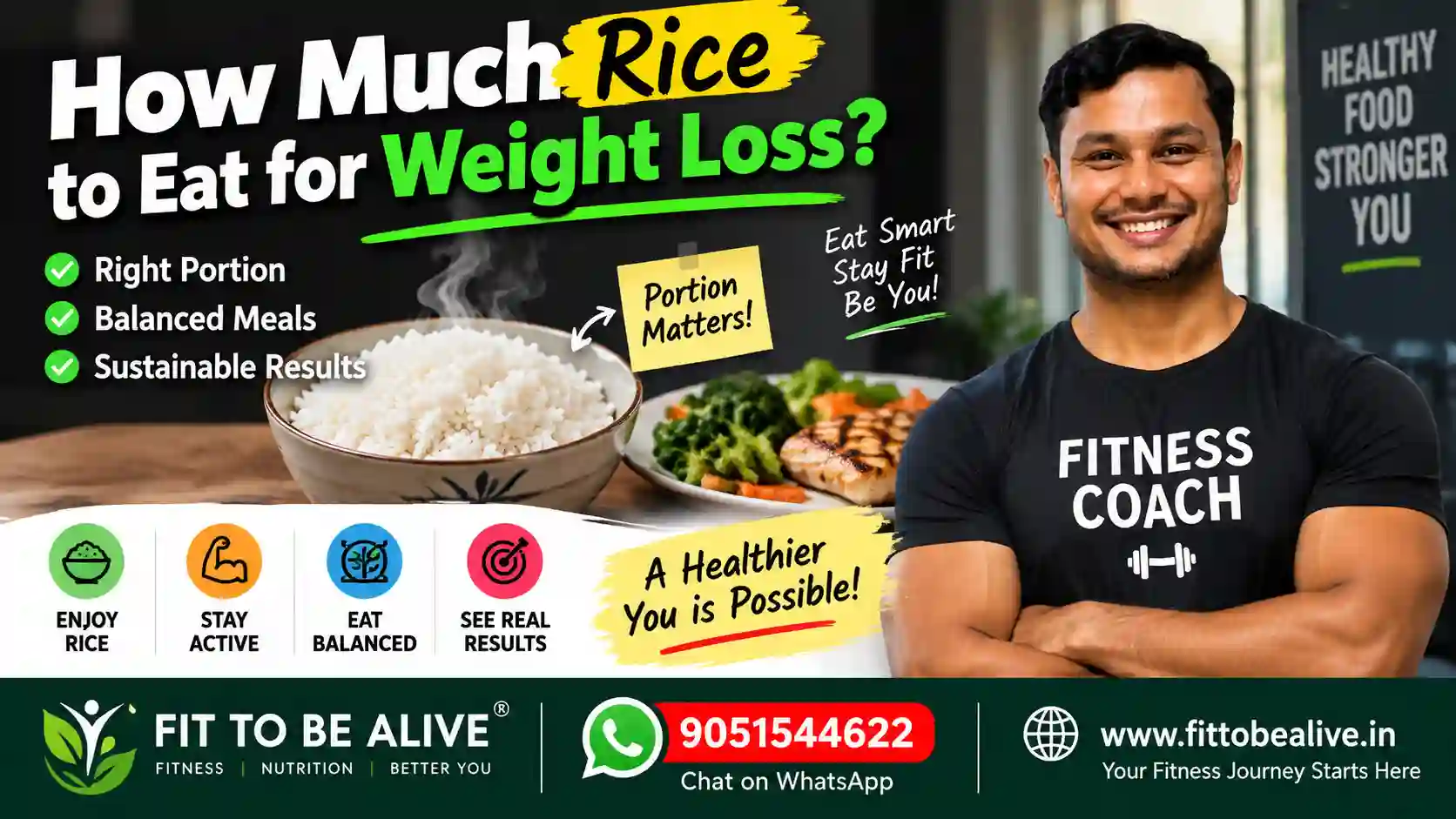
If you are trying to lose weight and rice is a regular part of your meals, you may be asking the same question many people ask me: how much rice to eat.
How much rice to eat for weight loss?
My practical answer is simple: you usually do not need to completely stop eating rice to lose weight. You need to control the portion, balance the meal, and make sure your overall lifestyle supports your goal.
Rice is a normal part of everyday eating for many people in Kolkata, New Town, Rajarhat, and across India. Trying to remove it completely can make a weight-loss plan feel restrictive, especially if rice is something you genuinely enjoy and have eaten throughout your life.
From my experience as a Certified Fitness Coach, I have found that the bigger problem is often not rice itself. The common issues are oversized portions, low protein intake, too little physical activity, inconsistent routines, and expecting fast results without building sustainable habits.
My approach to weight loss focuses on body composition and lifestyle change, rather than simply chasing a lower number on the weighing scale.
So, let’s make this practical.
Quick Summary
If your goal is weight loss, rice can still fit into your diet. A practical starting point for many adults is to reduce an oversized serving and build the rest of the plate around vegetables and a protein source. The exact amount depends on your body size, activity level, total calorie intake, hunger, training routine, and individual goals.
A useful framework is:
-
Start with a moderate portion of cooked rice instead of filling most of the plate with rice.
-
Include a good protein source in the meal.
-
Fill a large part of the plate with vegetables or other fibre-rich foods.
-
Control high-calorie additions such as excess oil, ghee, creamy gravies, and repeated servings.
-
Stay physically active and include strength-focused exercise when appropriate.
-
Track your progress for several weeks and adjust based on results.
-
Focus on consistency instead of looking for one “perfect” food.
There is no single amount of rice that guarantees weight loss for everyone. Weight management depends on the overall balance between the energy you consume and the energy your body uses, alongside factors such as sleep, stress, age, medications, and health conditions.
How Much Rice Should You Eat to Lose Weight?
The most honest answer is: it depends on the rest of your diet and lifestyle.
Someone who is physically active, strength training regularly, walking daily, and consuming appropriate portions throughout the day may need a different amount of rice from someone who spends most of the day sitting and is consuming excess calories from several other foods.
Instead of asking only, “Is rice good or bad for weight loss?”, I encourage people to ask:
Is my rice portion appropriate for my total meal?
Am I eating enough protein and vegetables?
Am I physically active enough?
Am I consistent with my fitness routine?
These questions are usually more useful than blaming one food.
For a practical starting point, you can try serving a moderate amount of cooked rice and observing how it fits into your full meal and daily calorie needs. If your plate is currently mostly rice, reducing the rice portion and adding more vegetables and protein may help you create a more balanced and satisfying meal, how much rice to eat.
Public-health guidance also supports focusing on the overall eating pattern rather than unnecessarily eliminating an entire food category such as carbohydrates.
My Practical Rice Portion Framework for Weight Loss
Rather than giving every person the same number, I prefer using a framework.
Step 1: Look at Your Current Portion
First, do not change anything.
Simply look at how much rice you normally eat.
Do you take one serving and then refill your plate?
Does rice cover most of your plate?
Are you eating a large amount of rice because there is very little protein or vegetables in the meal?
Many people discover that their usual portion is much larger than they realised. Measuring food occasionally can help you understand your normal serving size because rice changes in volume after cooking.
Step 2: Reduce the Portion Gradually if Necessary
You do not necessarily need to go from a large bowl of rice to almost no rice overnight.
Instead, reduce an oversized portion gradually.
For example, if your plate is mostly rice, make room for:
-
Vegetables
-
Dal or other pulses
-
Eggs
-
Fish
-
Chicken
-
Paneer or another suitable protein source
The goal is not to create a “rice-free” plate.
The goal is to create a better-balanced plate.
Step 3: Build the Meal Around Protein and Vegetables
One of the biggest mistakes I see in general fitness is focusing only on removing foods.
A better approach is to ask what is missing from the meal.
Vegetables can add volume and fibre, while protein-containing foods can help make meals more satisfying. Healthy eating guidance for weight management generally emphasizes a variety of nutrient-dense foods, including vegetables, fruits, whole grains, and appropriate protein sources.
Step 4: Do Not Forget Cooking Oil and Extras
Sometimes people reduce their rice but continue consuming large amounts of calories from:
-
Excess oil
-
Ghee
-
Fried foods
-
Sugary drinks
-
High-calorie snacks
-
Large restaurant portions
-
Multiple servings
Weight loss is not determined by rice alone.
Your entire day’s eating pattern matters.
Can You Eat Rice Every Day and Still Lose Weight?
Yes, rice can fit into a weight-loss diet for many people.
However, eating rice every day does not automatically mean weight loss will happen.
Your progress depends on the overall pattern.
If you eat an appropriate portion of rice while maintaining a balanced eating pattern and appropriate overall calorie intake, rice does not automatically prevent weight loss.
On the other hand, switching from rice to another food will not automatically cause weight loss if your overall calorie intake remains too high.
This is why I do not like telling people to fear one particular food.
For someone living in New Town or Rajarhat, a sustainable plan may be much easier when it works with familiar foods, family meals, work schedules, and local eating habits.
The best plan is often the one you can actually follow consistently.
White Rice vs Brown Rice for Weight Loss
People often assume that brown rice is automatically a weight-loss food and white rice automatically causes weight gain.
I would avoid looking at it that way.
Both can fit into an overall eating pattern depending on your preferences, portion size, digestion, total diet, and nutritional needs.
Whole-grain choices may offer nutritional advantages and can be a useful option for some people, but switching to brown rice alone is not a weight-loss strategy.
If you prefer white rice and can manage your portion while eating a balanced meal, you may find that approach easier to maintain.
If you enjoy brown rice and it helps you feel satisfied, that may work for you.
The important question is:
Can you follow your eating pattern consistently while meeting your overall health and weight-management needs?
The Biggest Rice Mistake I See: Eating Without a Plan
In my experience with general fitness clients, the biggest problem is usually not a single meal.
It is inconsistency.
Someone may eat very carefully for three days and then completely abandon the routine.
Another person may exercise intensely for one week and then stop for two weeks.
A sustainable transformation requires a routine that your brain and lifestyle can adapt to.
I have seen that transformation becomes much easier when a person starts building a fitness lifestyle instead of repeatedly starting and stopping a temporary plan.
That does not mean every day has to be perfect.
It means your normal routine should move you toward your goal more often than it moves you away from it.
My Body Composition Approach to Weight Loss
When I work within my scope as a fitness coach, I prefer to think beyond simply “losing kilograms.”
My focus is on supporting general fitness and sustainable body-composition improvement through appropriate exercise habits and lifestyle consistency.
Body composition refers broadly to what your body weight is made up of, including fat mass and lean tissues. For many people, strength-focused exercise, regular physical activity, and appropriate eating habits can be more useful long-term than repeatedly attempting extreme diets.
Regular physical activity and muscle-strengthening activity are important components of general health and weight management. Current public-health guidance recommends that adults get regular aerobic activity and muscle-strengthening activity on at least two days per week. Individual needs can vary.
A Simple Rice Meal Framework You Can Use
Here is a practical framework you can apply to lunch or dinner.
Your Plate
Try building the meal around:
1. A Moderate Rice Portion
Use rice as part of the meal instead of allowing it to dominate the entire plate.
Adjust the amount according to your activity level, hunger, body size, and overall nutrition plan.
2. A Protein Source
Depending on your dietary preferences, this could include foods such as:
-
Eggs
-
Fish
-
Chicken
-
Dal
-
Beans
-
Paneer
-
Soy-based foods
3. Plenty of Vegetables
Vegetables can add volume and nutrients to the meal and may help you create a more filling plate without relying entirely on calorie-dense foods.
4. Controlled Added Fats
Oil and ghee can be part of your diet, but portions matter because fats are calorie-dense.
This is especially important when someone believes they are eating “healthy” food but is unknowingly consuming large amounts of added oil.
Should You Eat Rice Before or After a Workout?
There is no universal answer for everyone.
Your training time, total daily food intake, digestion, and personal preference all matter.
Some people prefer carbohydrates such as rice before training because it fits comfortably into their routine. Others prefer eating after training as part of a balanced meal.
The most important factor for many beginners is not finding the “perfect” rice timing.
It is building consistency with:
-
Regular training
-
Adequate food intake
-
Appropriate recovery
-
Sleep
-
Hydration
-
A sustainable routine
Do not overcomplicate the process when you are just starting.
Five Fitness Components I Consider in General Fitness Training
My training method includes all five essential components of fitness as part of a broader general-fitness approach.
Depending on the individual and goal, I may work on areas such as:
Cardiovascular Endurance
Exercises and activities that support your ability to perform sustained physical activity.
Muscular Strength
Appropriate resistance exercises to develop strength.
Muscular Endurance
Training the ability of muscles to perform repeated work over time.
Flexibility and Mobility
Movement work designed to support comfortable and functional movement.
Body Composition
Supporting sustainable lifestyle and training habits that can contribute to changes in body composition.
The exact exercises and programming should depend on the person’s current fitness level, movement ability, experience, and goal.
For beginners, I focus on making fitness practical rather than unnecessarily complicated.
What I Tell My Clients About Results
One question I hear regularly is:
“Will I get results?”
My answer is simple:
If you are serious about your transformation, committed to the process, and consistent with the plan, then yes—you can make meaningful progress.
My role is to guide you, make the journey easier through practical experience, and help you build a routine you can understand and follow.
But no coach can do the work for you.
Consistency is the part that matters most.
You do not need perfection.
You need to keep returning to the process.
Who I Currently Train in General Fitness
I currently work within my general fitness coaching boundaries with adults aged 18 to 50, including beginners, subject to an appropriate assessment of whether general fitness coaching is suitable.
I can guide general fitness goals and adapt training toward a specific general fitness objective where appropriate.
However, I do not currently claim to provide specialized programming for people who require special-population expertise, higher medical supervision, or individualized medical clearance.
Special Populations: Important Boundary
Special populations can include individuals with unique physical, medical, or physiological needs that may require specialized programming, closer supervision, or medical clearance.
Examples may include:
-
Older adults requiring specialized programming
-
Pregnant individuals
-
People with chronic health conditions
-
People with disabilities
-
Other individuals whose needs require specialized expertise
If you have a medical condition, chronic disease, injury, disability, pregnancy-related needs, or other health concern that may affect exercise or nutrition, appropriate medical and qualified specialist guidance should come before starting a new programme.
I plan to expand my education in Special Populations training and Nutrition from March 2027, after completing the relevant education.
Until then, I stay within my current professional boundaries.
My Advice for People in Rajarhat and New Town, Kolkata
Living in a busy area such as Rajarhat or New Town can make consistency difficult.
Long work hours, traffic, social commitments, food delivery apps, and irregular schedules can all affect your fitness routine.
That is why I believe your plan should fit your real life.
You do not need an unrealistic diet.
You need a system.
My Simple Weight-Loss Framework
Step 1: Understand Your Starting Point
Look honestly at your current routine.
What are you eating?
How much are you moving?
How many days are you exercising?
How consistent are you?
Step 2: Keep Foods You Can Sustainably Eat
If rice is part of your lifestyle, learn how to include it instead of automatically banning it.
Step 3: Improve Your Plate
Reduce oversized portions.
Add vegetables.
Include protein.
Control excess oils and high-calorie extras.
Step 4: Train Consistently
Do not try to destroy yourself with exercise for one week.
Build a routine you can repeat.
Step 5: Build a Fitness Lifestyle
The goal is not simply to “finish a diet.”
The goal is to become someone who knows how to manage food, exercise, and daily habits over the long term.
Final Answer: How Much Rice Should You Eat for Weight Loss?
If you want a practical answer, start by avoiding oversized servings of rice and building a balanced meal around a moderate rice portion, protein, and plenty of vegetables.
Then monitor your progress.
If your overall eating pattern and activity level are not supporting your goal, adjust gradually.
Do not panic about rice.
Do not search for a magic food.
And do not expect results from being consistent for only a few days.
In my experience as a fitness coach, sustainable transformation becomes easier when you train your mind to accept fitness as part of your lifestyle.
If you are serious about your transformation, I am here to guide you through a practical general-fitness approach and help make the journey easier.
For adults aged 18 to 50 in Rajarhat and New Town, Kolkata, my focus is on beginner-friendly general fitness, the five essential components of fitness, and practical support toward appropriate fitness goals.
Your transformation does not need to begin with giving up rice. It can begin with learning how to eat, train, and live more consistently.
