
Rice vs Roti Weight Loss: Which Is Better?
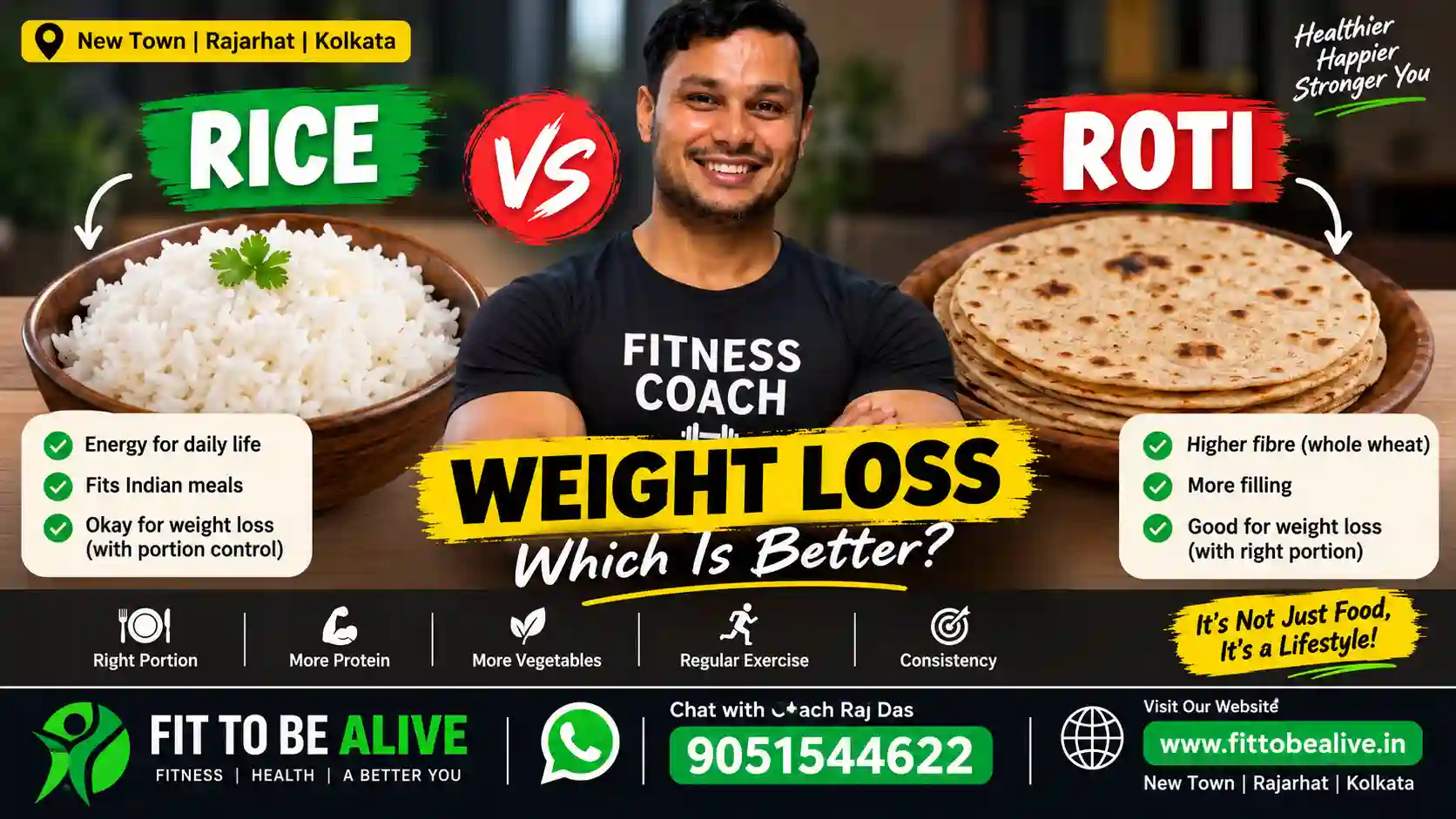
When people start a weight-loss journey, one of the most common questions I hear is: Should I stop eating rice and start eating roti to lose weight? rice vs roti for weight loss
My practical answer is simple: you do not automatically need to remove rice to lose weight, and roti is not automatically better for everyone.
For rice vs roti weight loss, the better choice depends on your portion size, total food intake, protein and vegetable intake, activity level, training routine, lifestyle, and—most importantly—whether you can follow your eating pattern consistently.
As a Certified Fitness Coach with more than two years of experience in the fitness industry, I have seen one common problem repeatedly: people become too focused on removing a single food instead of building habits they can maintain.
Rice is not the reason someone automatically gains body fat. Roti is not a guaranteed weight-loss food either. Sustainable weight loss generally requires an eating pattern that helps you manage overall energy intake while maintaining a balanced diet and staying physically active.
If you live in New Town or Rajarhat, Kolkata, this matters even more because rice is a normal part of many Bengali and Indian meals. In my opinion, completely removing a familiar staple food can make a weight-loss plan unnecessarily difficult if you cannot maintain that restriction for the long term.
Quick Summary: Rice vs Roti for Weight Loss
If you are looking for a direct answer to Rice vs Roti for Weight Loss: Which Is Better?, here is my practical framework:
-
Choose rice if you enjoy it, digest it comfortably, and can control your portion.
-
Choose whole-wheat roti if it helps you feel satisfied and fits your usual meals.
-
Choose either one when the rest of your plate includes adequate protein and plenty of vegetables.
-
Avoid oversized portions of both rice and roti.
-
Do not blame one carbohydrate source for weight gain while ignoring snacks, sugary drinks, cooking oil, restaurant food, and inconsistent habits.
-
For sustainable results, focus on body composition, strength, movement, food habits, recovery, and consistency, rather than searching for one “perfect” carbohydrate.
My experience has taught me that transformation becomes much easier when we train the brain to build a fitness lifestyle instead of following extreme rules for a few weeks.
Does Rice Cause Weight Gain?
Rice by itself does not automatically cause weight gain.
Weight change is influenced by the overall relationship between the energy you consume and the energy your body uses over time. If your regular intake consistently exceeds your body’s needs, body weight and body fat can increase. For weight loss, the overall eating pattern generally needs to support an energy deficit.
The problem I often see is this:
Someone eats a very large plate of rice, adds a calorie-dense curry, uses plenty of oil, eats fried snacks later in the day, drinks sugary beverages, and then blames the rice.
That is not a useful way to analyse the situation.
The same problem can happen with roti. A person may believe roti is a “weight-loss food” and eat several rotis with generous amounts of oil, butter, ghee, or calorie-dense side dishes.
For weight loss, how much you eat matters as well as what you eat.
My Practical View on Rice
I do not believe most healthy adults pursuing a general fitness goal need to fear rice.
Instead, ask:
-
How much rice am I eating?
-
What am I eating with it?
-
Am I getting enough protein?
-
Does my plate contain vegetables?
-
Am I active during the week?
-
Am I eating according to my goal most of the time?
-
Can I continue this routine for months rather than days?
These questions are usually more useful than simply asking whether rice is “good” or “bad.”
Is Roti Better Than Rice for Weight Loss?
Roti can be a useful option for weight loss, especially when whole-wheat flour is used.
Wholegrain starchy foods generally provide more fibre than refined alternatives, and fibre can contribute to fullness. Wholegrain carbohydrate choices can therefore be useful within a balanced weight-management plan.
However, this does not mean that everyone must replace rice with roti.
One person may feel comfortably satisfied after a controlled portion of rice with dal, vegetables, and a protein source. Another person may prefer roti and find it easier to manage their meals with it.
The best option is often the one that supports portion control, meal satisfaction, nutritional balance, and long-term consistency.
Roti May Be a Good Choice If You:
-
Prefer wheat-based meals.
-
Feel satisfied after eating a controlled number of rotis.
-
Want to include more wholegrain foods in your routine.
-
Find roti easier to portion in your usual meals.
-
Enjoy eating it with vegetables, dal, eggs, fish, chicken, paneer, or other protein sources.
Rice May Be a Good Choice If You:
-
Enjoy rice as part of your normal lifestyle.
-
Find it easier to maintain your diet when rice is included.
-
Can manage your serving size.
-
Build a balanced plate instead of eating rice alone.
-
Combine it with vegetables and an appropriate protein source.
For most people in a general fitness setting, I would not make this decision based only on the name of the carbohydrate.
Rice vs Roti Weight Loss: The Portion Framework I Prefer
Instead of asking my clients to fear one food, I prefer to help them understand their plate.
A practical meal framework can include:
Step 1: Start With Vegetables
Try to make vegetables a major part of the meal.
Vegetables can help add volume and fibre to meals while generally contributing fewer calories than many calorie-dense foods. Balanced weight-loss guidance commonly recommends including plenty of vegetables in main meals.
Examples may include:
-
Mixed vegetables
-
Palong or other leafy vegetables
-
Lau
-
Beans
-
Cauliflower
-
Cabbage
-
Carrots
-
Seasonal vegetables
Choose foods that you actually enjoy and can prepare consistently.
Step 2: Add a Protein Source
For general fitness and body-composition goals, I encourage clients to avoid building meals around carbohydrates alone.
Depending on individual dietary preferences, a meal may include foods such as:
-
Eggs
-
Fish
-
Chicken
-
Dal
-
Chana
-
Rajma
-
Paneer
-
Other suitable protein-rich foods
Protein-containing foods can also contribute to meal satisfaction.
Step 3: Add Rice or Roti
This is where your personal preference comes in.
You can include a sensible portion of rice.
Or you can include roti.
You do not need to turn this into an emotional decision.
The goal is to build a meal pattern you can repeat consistently while working toward your overall body-composition goal.
Step 4: Watch the Hidden Calories
This is an area many people overlook.
Pay attention to:
-
Excess cooking oil
-
Ghee or butter
-
Deep-fried foods
-
Sugary drinks
-
Frequent desserts
-
Large restaurant portions
-
Mindless snacking
Even nutritious foods can contribute to weight gain when total portions regularly exceed what your body needs.
The Biggest Mistake I See: Inconsistency
From my experience coaching beginners, one of the most common mistakes is not being consistent with the goal.
A person may eat extremely restrictively from Monday to Friday and then completely abandon the routine during the weekend.
Another person may change their diet every week because they saw a new social-media trend.
Another may stop eating rice for 10 days, lose motivation, and then return to their previous habits.
This cycle can make fitness feel much harder than it needs to be.
My approach is to help make the journey practical.
If your plan is so strict that you cannot follow it, the plan may not be suitable for your lifestyle.
My Body-Composition Approach to Weight Loss
When I work within my scope as a general fitness coach, I prefer to think beyond the number on the weighing scale.
My focus on weight loss is connected to body composition and sustainable lifestyle habits.
This means looking at factors such as:
-
Building regular exercise habits
-
Improving strength and general fitness
-
Increasing physical activity
-
Supporting better movement
-
Creating consistency
-
Developing realistic food habits
-
Helping beginners understand their own fitness journey
Weight alone does not tell the complete story of progress.
A person may become stronger, improve fitness, develop better habits, and feel more confident while their scale weight changes slowly.
That is one reason I encourage people not to depend emotionally on a single weigh-in.
The Five Essential Components of Fitness and Weight Loss
My training method includes all five essential components of fitness.
For beginners, I use general fitness exercises and programming that can help develop a more complete fitness foundation.
Depending on the individual’s goal and general fitness needs, training can involve areas such as:
Cardiovascular Fitness
This can include appropriate activities designed to improve general cardiovascular endurance.
Muscular Strength
Strength-focused exercises can help beginners develop better physical capacity and confidence.
Muscular Endurance
This focuses on improving the ability to perform repeated physical activity over time.
Flexibility
Mobility and flexibility work can support comfortable movement and general fitness.
Body Composition
For people whose goal includes weight loss or physical transformation, I focus on sustainable habits rather than extreme short-term methods.
My answer to clients who ask, “Will I get results?” is straightforward:
If you are serious about your transformation and remain committed to the process, then yes, you can make progress.
My role is to guide you and help make the journey easier using practical fitness experience.
A Simple Rice and Roti Decision Framework
Use this framework when deciding between rice and roti.
Choose Rice When:
-
Rice is part of your normal lifestyle.
-
You enjoy eating it.
-
You can manage the serving size.
-
You build the rest of the meal with protein and vegetables.
-
Removing rice would make your diet difficult to maintain.
Choose Roti When:
-
You prefer it.
-
It helps you feel satisfied.
-
Whole-wheat roti fits your usual eating pattern.
-
You can control the number of rotis you eat.
-
You enjoy it with balanced side dishes.
Use Both When:
There is no reason you must permanently choose one side.
You may eat rice in one meal and roti in another, depending on your preference, activity, appetite, and overall routine.
The goal is not to win the rice-versus-roti debate.
The goal is to build a lifestyle that supports your health and fitness goals.
A Practical Example for Beginners
Here is a simple way I would encourage a beginner to think about a main meal:
Option 1: Rice-based meal
A controlled serving of rice + vegetables + dal + an appropriate protein source.
Option 2: Roti-based meal
A suitable number of rotis + vegetables + dal + an appropriate protein source.
Both can fit into a general weight-loss approach.
The exact amount should not be copied blindly from another person because individual needs and circumstances vary.
My Advice for People in New Town and Rajarhat
For people living busy lives in New Town, Rajarhat, and Kolkata, the biggest challenge is often not knowing that vegetables and exercise are important.
The real challenge is consistency.
Busy work schedules, commuting, social events, eating outside, irregular routines, and lack of exercise can all make it difficult to follow a fitness plan.
That is why I believe a practical approach is more valuable than a perfect-looking plan that you cannot maintain.
You do not necessarily need to stop eating Bengali or Indian foods.
You need to learn how to organise your lifestyle around your goal.
Important Boundaries of My Coaching
My current coaching practice is focused on general fitness for adults aged 18 to 50.
I train beginners across the five essential components of fitness and provide general fitness guidance based on the client’s goal and needs within my professional scope.
I do not currently provide specialised training for populations who have unique medical, physical, or physiological requirements requiring customised programming, higher supervision, specialist expertise, or medical clearance.
This can include, for example:
-
Older adults outside my current general-fitness training range
-
Pregnant individuals
-
People with chronic health conditions
-
People with disabilities or other specialised needs
For people with medical conditions or special dietary requirements, individual advice should come from an appropriately qualified healthcare professional or registered dietitian.
I plan to expand my education in Special Populations training and Nutrition from March 2027 after completing the relevant education.
Final Answer: Rice vs Roti for Weight Loss
So, Rice vs Roti for Weight Loss: Which Is Better?
My answer is: the one that you can portion appropriately, combine with a balanced meal, and eat consistently as part of a sustainable lifestyle.
Whole-wheat roti can be a useful choice when you want a higher-fibre wholegrain option. Rice can also fit into a weight-loss plan when portions and the overall meal pattern are managed appropriately.
Do not build your entire transformation around removing one food.
Build your transformation around:
-
Consistency
-
Portion awareness
-
Balanced meals
-
Regular exercise
-
Strength and general fitness
-
Daily movement
-
Sustainable habits
-
Patience
From my practical experience, transformation becomes easier when your brain starts accepting fitness as a lifestyle rather than treating weight loss as a temporary punishment.
If you are serious about changing your lifestyle and improving your general fitness, start with the habits you can actually repeat.
Rice is not automatically the problem. Roti is not automatically the solution. Your consistency is what can make the biggest difference.
Looking for General Fitness Coaching in New Town or Rajarhat?
I am Raj Das, a Certified Fitness Coach with more than two years of experience in the fitness industry, helping adults aged 18 to 50 work toward general fitness and individual fitness goals within my coaching scope.
My approach includes the five essential components of fitness and focuses on making the journey practical for beginners.
If you are serious about your transformation, I am here to help guide you and make the journey easier through practical fitness experience.
Start Your Fitness Journey with a Local Coach in New Town or Rajarhat
If you live in New Town, Rajarhat, or nearby areas of Kolkata and are serious about improving your fitness, losing body fat, building a healthier lifestyle, or becoming stronger, you do not have to figure everything out alone.
I am Raj Das, a Certified Fitness Coach with 2+ years of experience in the fitness industry, and I help adults aged 18 to 50 build practical and sustainable fitness habits.
My coaching is designed especially for beginners and individuals who want a structured approach to general fitness. Instead of making you follow extreme diets or complicated workout routines, I focus on helping you build a fitness lifestyle that you can realistically maintain.
What You Can Expect From My Coaching
My training approach includes all five essential components of fitness, helping you develop a stronger foundation for general fitness and body composition goals.
Depending on your current fitness level and goal, I can help you work on:
-
Building a consistent exercise routine
-
Improving general strength and muscular endurance
-
Improving cardiovascular fitness
-
Working on flexibility and movement
-
Supporting sustainable body-composition and weight-loss goals
-
Helping beginners understand how to start their fitness journey
-
Creating practical routines based on your general fitness goals
My Promise Is Simple: Your Consistency Matters
One question clients often ask me is:
“Will I really get results?”
My answer is simple:
If you are serious about your transformation, willing to stay consistent, and ready to build better habits, then YES—you can make progress.
Fitness transformation does not have to mean following a perfect routine every day.
From my experience, the biggest changes happen when you train your mind to make fitness part of your lifestyle.
You do not need to be perfect.
You need to start, stay committed, and keep moving forward.
Looking for a Fitness Coach Near New Town or Rajarhat?
If you are tired of starting and stopping your fitness journey, feeling confused about workouts, or wondering whether rice, roti, or another single food is preventing your progress, it may be time to focus on the bigger picture.
Let’s work on your fitness foundation, consistency, exercise habits, and body-composition goals together.
I provide general fitness coaching for eligible adults aged 18 to 50 in and around Rajarhat and New Town, Kolkata, within my professional scope of practice.
Ready to Take Your Transformation Seriously?
Your fitness journey does not need to start with an extreme diet.
It can start with one decision:
Stop waiting for the “perfect time” and start building the habits that can change your lifestyle.
If you are in New Town or Rajarhat, Kolkata, and you are ready to begin your general fitness journey with practical guidance and a beginner-friendly approach, connect with Raj Das today and take the first step toward becoming fitter, stronger, and more consistent.
Your transformation starts when you decide to take action—and I am here to help make that journey easier.
