
Steps for Office Workers Weight Loss: A Practical Walking and Fitness Framework
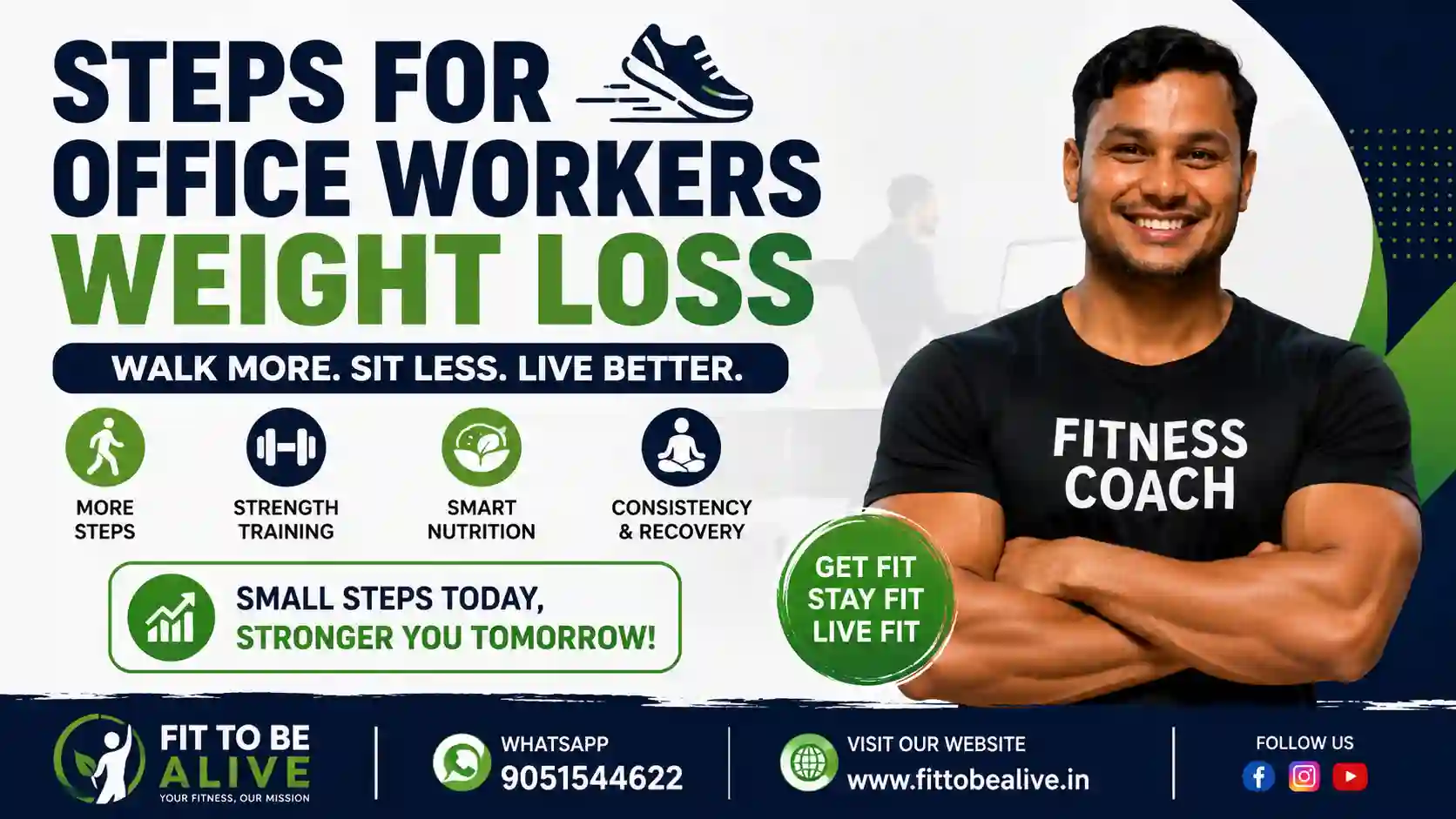
If you work at a desk for most of the day, you may already know the problem: you start your morning with good intentions, sit through meetings, spend hours in front of a laptop, commute home, and suddenly the day is over. Steps for office workers weight loss.
Then you wonder, “Why am I not losing weight?”
One of the most practical places to start is increasing your daily movement.
The right steps for office workers weight loss plan is not about blindly chasing 10,000 steps every day. Steps can help increase your daily activity, but sustainable weight loss also depends on your eating habits, structured exercise, recovery, consistency, and overall lifestyle.
As a certified fitness coach, I prefer to look at weight loss through body composition and sustainable fitness, rather than simply trying to make the number on the weighing scale smaller.
For an office worker, the goal is simple:
Sit less. Move more. Train properly. Eat appropriately. Stay consistent.
That framework is much more useful than searching for one perfect step target.
How Many Steps Should an Office Worker Take for Weight Loss?
There is no single step number that guarantees weight loss.
You will often hear 10,000 steps a day recommended, but 10,000 is not a universal medical requirement for losing weight. Research has shown health benefits at lower step counts too, while the amount of activity needed for weight management varies between individuals.
Instead of immediately setting an aggressive target, I recommend starting with your current average.
Start with your baseline
For the next 5–7 days, check how many steps you naturally take.
For example:
-
If you average 3,500 steps, don’t suddenly demand 12,000 every day.
-
If you average 6,000, try building toward 7,000–8,000.
-
If you already average 9,000–10,000, adding more steps may not be the most important next step.
The target should fit your lifestyle.
A person working in an office in New Town may have a very different routine from someone commuting long distances or working from home in Rajarhat. Steps for office workers weight loss.
Think about weekly consistency, not one perfect day
Your body does not judge your fitness based on whether Tuesday was a 10,000-step day.
What matters more is what you repeatedly do over weeks and months.
If your normal workday is sedentary, adding several short walking opportunities can make your day considerably more active. Steps for office workers weight loss.
Why Walking Helps Office Workers
Most desk-based workers have a simple challenge: too much uninterrupted sitting.
WHO identifies sedentary behaviour as a health concern and recommends that adults limit sedentary time and increase physical activity. WHO also recommends adults accumulate 150–300 minutes of moderate-intensity aerobic activity per week, along with muscle-strengthening activities on at least two days per week.
Walking is useful because it is accessible.
You don’t necessarily need a gym, expensive equipment, or an advanced exercise program to start moving more.
Use walking to break the office routine
Try simple changes such as:
-
Walk while taking a phone call.
-
Take the stairs when practical.
-
Walk to speak to a colleague instead of sending a message.
-
Take a short walk during a break.
-
Walk for part of your commute when practical.
-
Take a 5–10 minute walk after a meal when your schedule allows.
-
Park or get off public transport slightly farther away when safe and practical.
-
Take a short evening walk instead of immediately sitting down after work.
The important idea is not that one of these activities magically burns fat.
The idea is to create more movement opportunities throughout your day.
The Office Worker Weight Loss Framework I Recommend
I don’t want clients to think that weight loss means “walk more and eat less.”
That approach is too simplistic.
My framework is based on building a fitness lifestyle that a person can actually maintain.
Step 1: Measure your current activity
Start with your average daily steps.
Don’t compare yourself with your friend, colleague, fitness influencer, or someone who has been training for years.
Compare yourself with yourself.
Your first goal could simply be to increase your average movement gradually.
Step 2: Create walking opportunities
Instead of relying on one long walk, distribute movement across your day.
For example:
Morning: 10-minute walk
Workday: several short movement breaks
Lunch: 10-minute walk when practical
Evening: 20–30-minute walk
You can adjust this according to your work schedule, fitness level and recovery.
The best plan is the one you can repeat.
Step 3: Add resistance training
This is where many office workers make a mistake.
They focus entirely on steps and forget strength training.
For sustainable body composition, I don’t want clients to think only about losing scale weight. Maintaining and developing muscle through appropriate resistance training is an important part of a balanced fitness program.
General fitness programs commonly include cardiorespiratory fitness, muscular strength, muscular endurance, flexibility and body composition.
For beginners, exercises may include movements such as:
-
Squats or appropriate squat variations
-
Push-ups or modified push-ups
-
Rows
-
Lunges or appropriate alternatives
-
Hip-hinge movements
-
Core exercises
-
Resistance-band exercises
The exact exercise selection should depend on the person’s ability, experience and goal.
Step 4: Don’t ignore your food habits
Walking can increase physical activity, but weight management involves both activity and food intake.
NIDDK notes that a healthy eating pattern and regular physical activity are important parts of losing weight and maintaining weight loss.
You don’t need to make your diet complicated.
Start by paying attention to:
-
Portion sizes
-
Protein-rich foods
-
Vegetables and fruits
-
Whole or minimally processed foods
-
Sugary drinks
-
Frequent snacks
-
Restaurant and takeaway meals
-
Weekend eating habits
The goal is not to create a temporary “diet.”
The goal is to develop eating habits you can continue.
Step 5: Track more than body weight
If your goal is body composition, the weighing scale is only one measurement.
Depending on the situation, I prefer looking at several indicators:
-
Body weight trend
-
Waist measurement
-
Strength improvements
-
Fitness improvements
-
Daily activity
-
How clothes fit
-
Consistency with training
-
Energy and general wellbeing
Body weight can fluctuate for many reasons, so don’t panic because one morning’s number is higher.
Look at the trend.
A Simple Step Target for a Desk Job
If you want a practical starting point, use this framework instead of chasing a universal number.
Beginner office worker
If you’re currently very inactive, start by increasing your existing average gradually.
For example, if you normally walk 3,000–4,000 steps, adding another 1,000–2,000 steps can be a reasonable starting experiment.
Then reassess.
Moderately active office worker
If you’re already around 6,000–8,000 steps, focus on improving the quality of your overall routine rather than assuming you must reach 10,000.
Add structured exercise and improve your eating habits.
Already highly active
If you regularly walk 10,000 or more steps but your body composition isn’t changing, simply adding more steps may not solve the problem.
At that point, look at the complete picture:
nutrition + resistance training + aerobic activity + recovery + consistency.
This is why I don’t give every client the same step target.
What I See as the Biggest Mistake
One of the most common mistakes I see is not a lack of information.
It is inconsistency with the goal.
Someone follows a plan for five days, misses a few sessions, eats differently over the weekend, and then decides the plan isn’t working.
Fitness doesn’t work like that.
You don’t need to be perfect.
You need to become consistent enough that healthy behaviour becomes part of your lifestyle.
Train your routine, not just your body
In my experience, transformation becomes much easier when the person starts building a fitness lifestyle.
That means your brain gradually becomes comfortable with:
-
Regular training
-
Walking
-
Planning meals
-
Sleeping properly
-
Tracking progress
-
Recovering
-
Showing up even when motivation is low
Motivation will change.
Your routine needs to survive those changes.
A Practical Weekly Framework for Office Workers
Here is a simple example for a generally healthy beginner.
Monday
30-minute strength-training session + normal daily walking.
Tuesday
Brisk walking or another moderate aerobic activity.
Wednesday
Strength training + short walking breaks during work.
Thursday
Walking-focused day with regular movement breaks.
Friday
Strength training or a suitable full-body session.
Saturday
Longer walk, recreational activity or another enjoyable form of exercise.
Sunday
Recovery, easy walking and preparation for the week.
This is only a framework, not a prescription for every person.
Your training frequency, exercise selection and intensity should match your current fitness level and goal.
How I Approach Weight Loss as a Fitness Coach
I am Raj Das, a Certified Fitness Coach with 2+ years of experience in the fitness industry, and I work with beginners and general-fitness clients.
My training approach includes the five health-related fitness components:
-
Cardiorespiratory endurance
-
Muscular strength
-
Muscular endurance
-
Flexibility
-
Body composition
I use exercises that I actually use for general fitness and adapt the approach when a client has a specific goal.
For me, the question “Will I get results?” has a practical answer:
If you are serious about your transformation and willing to follow the process consistently, I am there to make the journey easier with my practical experience and guidance.
I don’t promise instant transformation.
I focus on helping clients build habits that can continue after the initial excitement disappears.
Who I Train in Rajarhat and New Town
My current general-fitness training is for adults aged 18–50, both men and women.
I currently work within my scope of practice for general fitness and do not train special populations.
Who should seek specialist guidance?
Special populations can include people with unique physical, medical or physiological needs that require customized programming, additional supervision or medical clearance.
This may include:
-
Older adults
-
Pregnant individuals
-
People with chronic health conditions
-
People with disabilities
-
Individuals requiring post-rehabilitation exercise
If you fall into one of these categories, appropriate medical or specialist guidance should come first rather than trying to follow a generic office-worker weight-loss program.
I plan to expand my education into Special Populations training and Nutrition in March 2027, after completing the relevant education.
The Bottom Line: Steps Are a Tool, Not the Whole Strategy
If you searched for steps for office workers weight loss, don’t leave this page thinking that you must hit exactly 10,000 steps every day.
Instead, remember this framework:
Move more → walk regularly → break up sitting → strength train → eat appropriately → recover → stay consistent.
Walking can be an excellent starting point for a desk worker, particularly if your current lifestyle involves very little movement.
But sustainable body-composition change requires a bigger picture.
You don’t need the perfect plan.
You need a realistic plan that fits your working life and that you can follow consistently.
If you’re based in New Town, Rajarhat or the surrounding Kolkata area and you’re an adult between 18 and 50 looking for general fitness or a structured approach to improving your body composition, you can contact me to discuss your goals and see whether my training approach is appropriate for you.
Start with the movement you can do today. Then build from there.
