
Can I Lose Weight Without Going to the Gym?
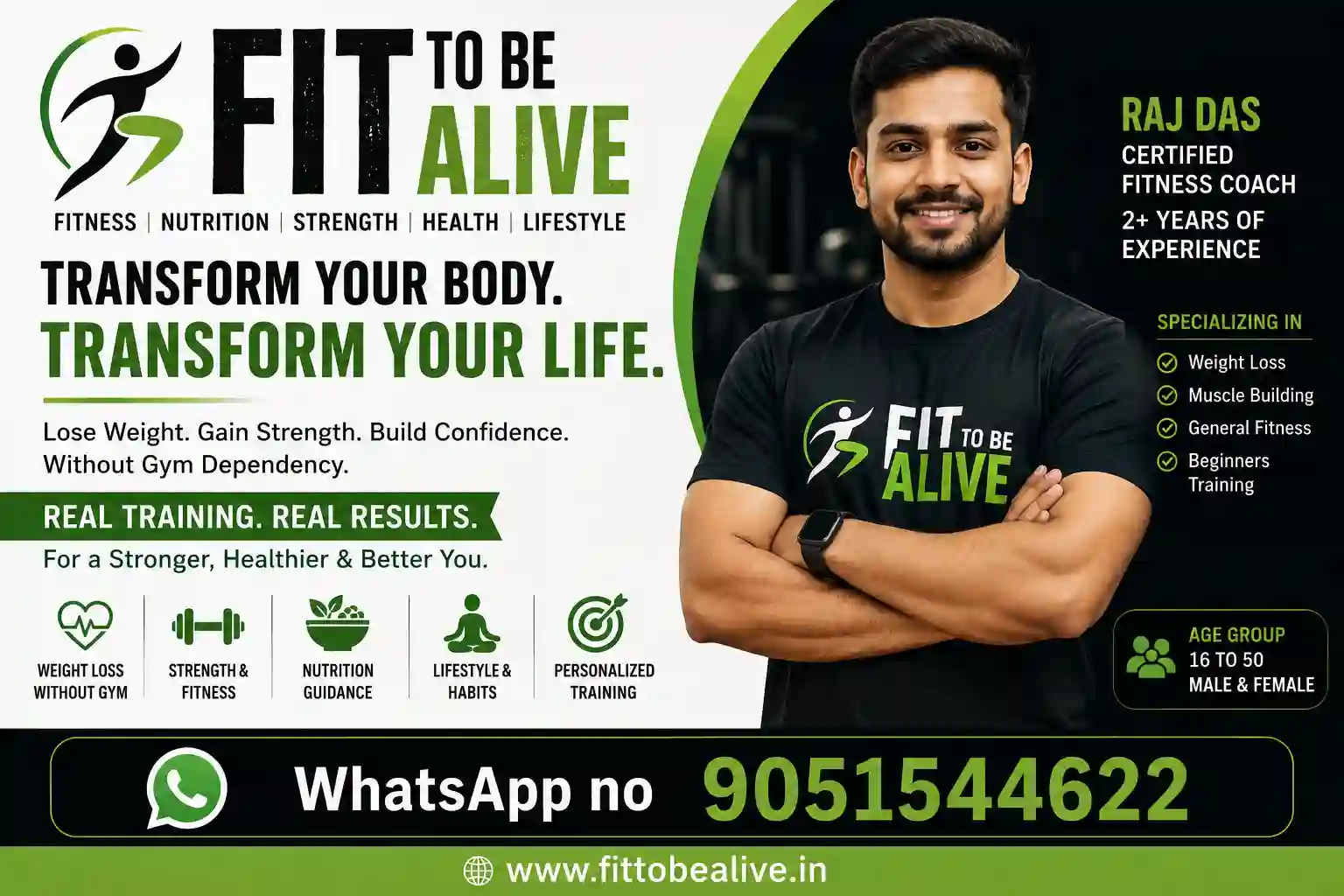
Yes—you can lose weight without going to a traditional gym.
But I want to make one thing clear from the beginning: not going to the gym does not mean doing nothing. Sustainable weight loss still requires a combination of physical activity, sensible eating, recovery and, most importantly, consistency.
As a Certified Fitness Coach with 2+ years of experience in the fitness industry, this is one of the questions I hear regularly from clients and beginners.
My answer is simple:
If you are serious about your transformation, yes, you can get results.
You do not necessarily need expensive gym equipment, complicated workouts or hours of exercise every day. What you need is a practical fitness plan that fits your lifestyle and a mindset that allows you to continue even when motivation goes down.
I work with beginners and clients from different backgrounds, including men and women between 16 and 50. My approach is not simply about making the number on the weighing scale smaller. I focus on body composition and sustainable fitness, because looking and feeling better should not come at the cost of losing strength, energy or healthy habits.
For people living in New Town, Rajarhat and nearby areas of Kolkata, this can be especially practical. Your fitness routine can be built around your home, outdoor spaces, walking routes and the equipment you actually have access to.
The Short Answer: You Don’t Need a Gym to Lose Weight
Weight loss happens when, over time, your body uses more energy than it receives from food and drinks.
Physical activity can increase the amount of energy you use, while your eating pattern determines how much energy you consume. Combining regular movement with appropriate nutrition can therefore support lose weight without gym.
The gym is simply one environment where you can exercise.
It is not the only environment.
You can walk.
You can climb stairs.
You can perform bodyweight exercises.
You can use resistance bands.
You can train with basic equipment at home.
You can exercise outdoors.
You can play a sport.
You can build an active lifestyle around your daily routine.
The important question is not:
“Do I have a gym membership?”
The better question is:
“Can I consistently follow a fitness routine that supports my goal?”
That is where I believe the real transformation begins.
Why I Don’t Treat Weight Loss as Only a Scale Problem
One of the biggest mistakes I see is focusing entirely on body weight.
The weighing scale can be useful, but it does not tell the whole story.
My approach is based on body composition—looking at the relationship between body fat and lean mass while improving overall physical fitness.
Two people can have the same body weight but look and perform completely differently.
This is why I don’t want clients to chase a particular number at any cost.
I want them to become stronger, fitter and more capable while gradually developing habits they can maintain, lose weight without gym.
For me, sustainable transformation means:
-
improving physical fitness
-
building strength
-
improving cardiovascular fitness
-
developing mobility and flexibility
-
supporting healthier body composition
-
becoming more physically active
-
creating habits that can continue after the initial weight-loss phase
This is also why I use a broader fitness framework instead of making every session about burning calories, lose weight without gym.
My Five-Component Fitness Framework
I train beginners using the five interconnected components of physical fitness recognised in the current ACSM framework: cardiorespiratory fitness, muscular fitness, body composition, flexibility and neuromotor fitness.
1. Cardiorespiratory Fitness
This is your ability to perform activities that challenge your heart and lungs.
For a beginner, that does not automatically mean running.
It could be brisk walking, cycling, jogging, dancing, sports or another activity appropriate to the person’s fitness level.
If you are currently inactive, starting with manageable activity is usually more practical than trying to copy an advanced workout.
2. Muscular Fitness
Muscular fitness includes developing your ability to produce and sustain force.
You don’t necessarily need a full gym setup.
Depending on the individual, I may use exercises such as squats, lunges, push-ups, rows, resistance-band movements, carries, planks and other appropriately scaled exercises.
The exercise selection changes according to the person’s ability and goal.
3. Body Composition
This is particularly important when the goal is weight loss.
Instead of thinking only about “losing weight,” I prefer to think about improving the relationship between body fat and lean mass while maintaining a sustainable lifestyle.
That changes the conversation from:
“How quickly can I lose 10 kg?”
to:
“How can I become healthier, fitter and maintain my results?”
4. Flexibility
Mobility and flexibility are important parts of being able to move comfortably and perform exercises properly.
Your routine doesn’t need to become a one-hour stretching class.
A practical programme can include appropriate mobility and flexibility work around your training.
5. Neuromotor Fitness
This component relates to qualities such as balance, coordination and movement control.
For beginners, developing better control over basic movements can make exercise more effective and enjoyable.
This is one reason I don’t believe every beginner should immediately be given an advanced workout.
First, learn to move well.
Then progress.
How to Lose Weight Without Going to a Gym
If you don’t want to join a gym, I would build your plan around five areas.
Step 1: Start With Your Actual Lifestyle
Don’t begin with an unrealistic schedule.
Look at your current day.
When can you realistically exercise?
Can you walk in the morning?
Can you train at home after work?
Can you use the stairs?
Can you dedicate one hour to structured training?
The best programme is not the programme that looks impressive on paper.
It is the programme you can actually follow.
Step 2: Make Walking Part of Your Routine
Walking is one of the simplest ways to increase daily physical activity.
You don’t have to turn every walk into a workout.
You can walk to nearby places, take a walk after meals, use stairs where appropriate or schedule a dedicated brisk walk.
For adults, WHO recommends at least 150 minutes of moderate-intensity physical activity per week, or 75 minutes of vigorous activity, with muscle-strengthening activity on at least two days per week. More activity can provide additional benefits.
That recommendation is a useful framework—not a reason to suddenly go from zero exercise to an extreme routine.
Step 3: Add Strength Training
If your goal is sustainable weight management and better body composition, I don’t recommend thinking about cardio alone.
Strength training can be performed at home with bodyweight movements, resistance bands or simple equipment.
For example, a beginner programme might include appropriately scaled versions of:
-
squats
-
push-ups
-
lunges
-
hip-hinge movements
-
rows
-
overhead pressing
-
core exercises
The exact exercises, sets and repetitions should depend on the person’s fitness level, technique and goal.
Step 4: Improve Your Food Habits
Exercise is important, but it cannot compensate indefinitely for an eating pattern that consistently provides more energy than your body uses.
You don’t have to label every food as “good” or “bad.”
Instead, build a realistic eating pattern.
Pay attention to:
-
portion sizes
-
protein-rich foods
-
vegetables and fruits
-
whole or minimally processed foods
-
sugary drinks and frequent high-calorie snacks
-
hydration
-
eating patterns you can maintain
You also don’t necessarily need to count every calorie forever. The right approach depends on the person.
Step 5: Train Your Brain for Consistency
This is one of the biggest lessons I have learned from working with people.
Transformation becomes easier when your brain starts accepting fitness as part of your lifestyle.
At first, exercise can feel like something extra.
Eventually, it can become normal.
That mental shift matters.
Instead of saying:
“I need motivation to exercise.”
Try creating a routine where exercise has a fixed place in your week.
Motivation changes.
Habits can carry you through the days when motivation isn’t there.
A Practical No-Gym Weight-Loss Framework
If I were helping a beginner in New Town or Rajarhat start from scratch, I would think about the process like this:
Phase 1: Build the Habit
Start with manageable activity.
The objective is not to destroy yourself during the first week.
The objective is to prove to yourself:
“I can follow this.”
Walking, basic mobility and beginner-friendly strength exercises can form the foundation.
Phase 2: Build Fitness
Once consistency improves, gradually increase the challenge.
You might increase walking duration, improve exercise technique, add resistance or progress the difficulty of movements.
Your body needs an appropriate challenge to continue adapting.
Phase 3: Focus on Body Composition
Once training and lifestyle habits become more consistent, we can pay more attention to body composition and nutrition.
This is where I don’t want clients chasing crash diets or extreme exercise.
A gradual, sustainable approach is generally more realistic for maintaining results. CDC guidance also emphasises healthy eating patterns, regular activity, sleep and stress management as parts of healthy weight management.
Phase 4: Build a Fitness Lifestyle
This is the stage I really want clients to reach.
Fitness should stop feeling like a temporary project.
It becomes part of your lifestyle.
You don’t exercise only because you want to lose weight.
You exercise because you want to remain strong, active and capable.
Common Mistakes I See With Weight Loss
Expecting Results Without Consistency
This is probably the biggest problem.
People often change their routine for a few days, don’t immediately see a dramatic difference and stop.
Transformation takes time.
Your job is to keep showing up.
Doing Too Much Too Soon
Starting with an extremely difficult workout can leave a beginner exhausted or sore and make the routine difficult to maintain.
I would rather see someone follow a sensible programme consistently than complete one extreme workout and disappear for two weeks.
Thinking Only About Cardio
Walking and cardio have their place, but a complete fitness approach should not ignore muscular fitness, flexibility, movement control and body composition.
Obsessing Over the Weighing Scale
Scale weight can fluctuate.
Look at the bigger picture: fitness, strength, measurements, how your clothes fit, energy, performance and your ability to maintain your routine.
Changing Everything at Once
You don’t have to completely redesign your life on Monday morning.
Start with a few changes.
Make them normal.
Then build from there.
How My One-Hour Training Sessions Work
My sessions are generally one hour, and I use that time according to the client’s needs.
I train beginners across the five fitness components and use exercises I actually consider useful for general fitness.
If someone has a specific goal, I can also adapt the training towards that goal.
I don’t believe every person needs exactly the same workout.
A beginner who has never trained should not necessarily receive the same programme as someone who has been exercising for years.
Your current fitness level, goal, movement ability, experience and lifestyle all matter.
That is why I prefer a practical approach rather than simply giving everyone a generic workout.
Can Beginners Really Lose Weight Without a Gym?
Yes.
But don’t confuse “without a gym” with “without a plan.”
You still need appropriate physical activity, sensible nutrition, recovery and consistency.
And if you have a medical condition, injury, are pregnant, take medications that may affect weight or exercise tolerance, or have any concern about starting exercise, speak with an appropriate healthcare professional before beginning or significantly changing your programme.
The goal isn’t to prove that you can avoid a gym.
The goal is to build a system that works for you.
Weight Loss Training in New Town and Rajarhat
If you live in New Town, Rajarhat or the surrounding Kolkata area, you don’t have to wait until you feel “fit enough” to start.
I work with beginners as well as people who have specific fitness goals.
My clients include both men and women, generally from 20 to 50 years old, and I adapt training according to the person’s starting point and requirements.
My focus is practical fitness—not making exercise unnecessarily complicated.
If your goal is weight loss, I want us to look beyond simply reducing your body weight.
We can work towards better body composition, improved fitness and a routine that can become part of your lifestyle.
My Answer to “Will I Actually Get Results?”
This is one of the most important questions a client can ask.
My answer is:
If you are serious about your transformation and willing to follow the process, yes, you can make meaningful progress.
I cannot promise that everyone will lose a specific number of kilograms in a specific number of weeks.
That would not be responsible.
Your results depend on many factors, including your starting point, nutrition, activity, sleep, consistency, individual circumstances and health.
What I can do is use my practical experience to make the process easier to understand.
I’ll guide you.
I’ll help you train correctly.
I’ll adjust the approach when necessary.
And I’ll help you develop a fitness lifestyle instead of constantly searching for the next quick fix.
Ready to Start Your Fitness Journey?
You don’t need to wait for the perfect Monday.
You don’t need to buy an expensive gym membership.
And you don’t need to become an athlete before you begin.
You need a realistic starting point.
If you are in New Town, Rajarhat, Kolkata and want guidance with weight loss, general fitness or a specific fitness goal, I can help you build a practical training approach based on your current level and requirements.
Start with the goal. Build the habit. Improve your fitness. Make the lifestyle sustainable.
That is the framework I believe in.
And that is how I approach fitness coaching.
Frequently Asked Questions
Can I lose weight without going to the gym?
Yes. Weight loss does not require a traditional gym membership. Walking, home-based resistance training, outdoor activities and other forms of physical activity can contribute to an effective fitness routine. Nutrition and overall energy balance also matter.
What exercises can I do at home to lose weight?
Depending on your fitness level, exercises such as squats, lunges, push-ups, rows with resistance bands, hip-hinge movements and core exercises can be useful. Walking and other aerobic activities can complement strength training.
Is walking enough to lose weight?
Walking can be an excellent starting point and can contribute to increased physical activity. However, whether walking alone produces your desired weight-loss result depends on factors including your food intake, activity level, starting point and consistency.
Do I need to exercise every day?
Not necessarily. The right frequency depends on your goal, fitness level and schedule. For adults, general health guidelines recommend at least 150 minutes of moderate aerobic activity per week plus muscle-strengthening activity on at least two days per week.
Can beginners start fitness training?
Absolutely. In fact, beginners are one of the groups I enjoy working with because the focus can be on learning the fundamentals properly.
You don’t have to be fit before you start training.
Can I lose fat and maintain muscle?
A well-designed training and nutrition approach can support improvements in body composition. Resistance training is particularly useful for maintaining or developing muscular fitness, while nutrition and overall activity need to support the broader goal.
How long are your training sessions?
My training sessions are generally one hour. I use that time according to the individual’s fitness level, goals and training requirements.
Do you train both men and women?
Yes. I train both male and female clients, generally between the ages of 16 and 50, with the programme adapted to the individual’s needs.
Do you only provide weight-loss training?
No. I train beginners across the five components of fitness and can also guide clients towards specific fitness goals.
Where do you provide fitness coaching?
My local service area is Rajarhat and New Town, Kolkata. If you are nearby and looking for practical fitness coaching, you can get in touch to discuss your goals and requirements.
Final Takeaway
Can I lose weight without going to the gym? Yes.
But the real answer is bigger than that.
You don’t need a gym to build a healthier body.
You need a practical plan, appropriate exercise, sensible nutrition and the consistency to keep going.
From my experience as a Certified Fitness Coach, I have seen that transformation becomes much easier when fitness stops being a temporary challenge and becomes part of your lifestyle.
Train your body. Train your habits. Train your mindset.
That is where sustainable transformation begins.
“If you prefer having a structured program and someone correcting your technique, you can learn more about my personal training program in New Town.”
