
Bengali Vegetarian Diet for Weight Loss: A Practical 7-Day Framework
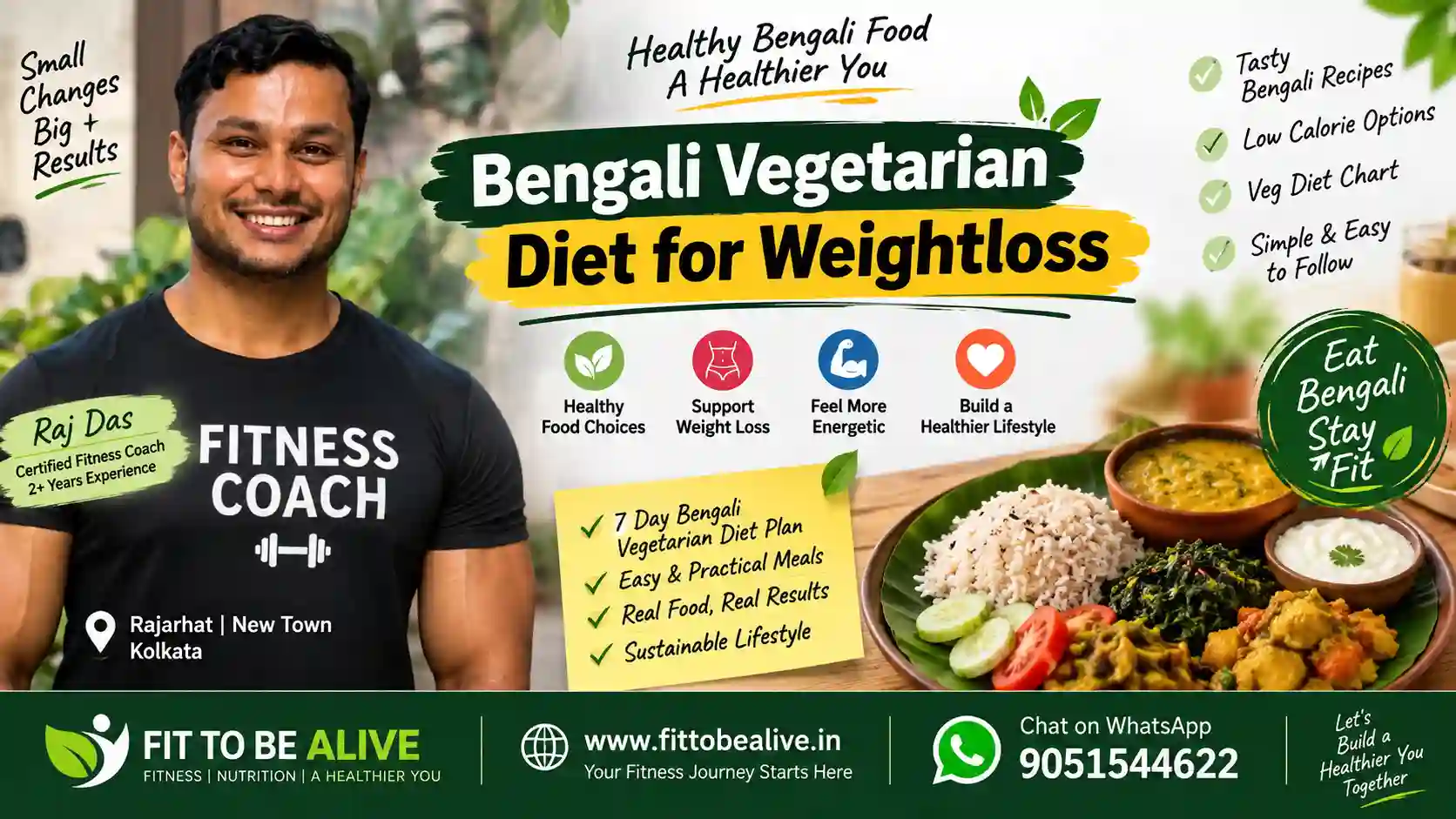
A Bengali vegetarian diet for weightloss can absolutely support sustainable fat loss without giving up dal, rice, vegetables, roti, fruits, or familiar Bengali flavours. The key is not to follow a crash diet. It is to control portions, include enough protein and vegetables, reduce calorie-dense extras, and stay consistent with exercise and daily habits.
As a Certified Fitness Coach, I often hear one question from beginners: “Will I actually get results?”
My answer is simple: if you are serious about your transformation and willing to build consistent habits, you can make meaningful progress. My role is to make that journey practical and easier to follow.
For people in Rajarhat and New Town, Kolkata, this matters because a weight-loss plan has to work with real life—office schedules, family meals, Bengali food, eating outside, weekends, and limited preparation time.
This guide gives you a practical framework rather than a rigid “eat this and nothing else” diet.
Quick answer: what should a Bengali vegetarian weight-loss plate look like?
A simple meal can be built around:
A generous serving of vegetables or salad
A sensible portion of rice or roti
Dal, chana, rajma, soy, paneer, curd or another suitable vegetarian protein source
A whole fruit when appropriate
Controlled amounts of cooking oil, nuts and other calorie-dense foods
Water instead of sugary drinks most of the time
ICMR-NIN’s Dietary Guidelines for Indians recommend including vegetables, whole grains, pulses and beans, while reducing highly processed foods, sugary foods and excess calorie intake. They also emphasise gradual rather than crash weight loss.
Why Bengali Food Can Work for Fat Loss
You do not need to replace Bengali food with expensive “diet food”.
Traditional foods such as dal, lau, potol, begun, bandhakopi, phulkopi, shak, beans, chana, soy, curd and seasonal fruits can fit into a calorie-controlled eating pattern.
The bigger issue is usually how much you eat, how the food is prepared, and what you eat alongside it.
For example, rice itself does not automatically prevent fat loss. A large rice portion combined with fried foods, sweets, sugary drinks and excessive oil can make a meal much more calorie-dense.
Instead of asking, “Is rice bad for weight loss?”, I prefer asking:
“What does my complete meal look like?”
That change in thinking makes a diet much easier to maintain.
The body-composition approach
My approach to weight loss is not simply about making the number on the weighing scale smaller.
The goal is to improve body composition—reducing excess body fat while maintaining or developing useful lean tissue through appropriate nutrition and resistance exercise.
Weight management depends on the relationship between food intake, physical activity and other lifestyle factors. Regular physical activity combined with appropriate calorie intake can create the energy deficit required for weight loss.
That is why I encourage clients to think beyond “How many kilos did I lose this week?”
Look at consistency, waist measurements, strength, fitness, energy, habits and how your clothes fit as well.
Bengali Veg Diet Chart for Weight Loss: The Basic Framework
Rather than prescribing the exact same quantity to everyone, use this framework and adjust portions according to your body size, activity level, goals and individual needs.
Breakfast
Choose one practical option:
Vegetable oats or vegetable upma
Two small rotis with vegetable preparation and curd
Chire/poha with vegetables and a protein source
Moong-dal chilla with curd
A balanced homemade breakfast based on your usual Bengali foods
Try to avoid turning breakfast into a combination of refined carbohydrates, sugary tea and biscuits every day.
Lunch
A simple Bengali lunch can include:
Rice or roti in a controlled portion
Dal
One or two vegetable preparations
Salad or additional vegetables
Curd if suitable for you
A protein-rich vegetarian option when required
You do not have to remove rice completely.
The practical strategy is to make vegetables and protein a meaningful part of the meal instead of allowing rice to dominate the plate.
Evening snack
Good options include:
Whole fruit
Roasted chana
A small portion of nuts
Curd
Sprouts
Unsweetened tea with a sensible snack
Be particularly careful with frequent biscuits, sweets, fried snacks and sugary beverages.
Dinner
Dinner can be similar to lunch but does not need to be unnecessarily heavy.
Examples include:
Roti with mixed vegetables and dal
Vegetable soup with a suitable protein source
Khichdi with vegetables and an additional protein source
Vegetable preparation with paneer/tofu/soy and a controlled carbohydrate portion
There is no universal rule that you must stop eating carbohydrates at night. Your overall daily intake and consistency matter more.
7 Day Bengali Vegetarian Diet Plan
Use this as a framework, not as a medically prescribed calorie plan.
Day 1
Breakfast: Vegetable chire with curd
Lunch: Rice, moong dal, lau and mixed vegetables
Snack: One whole fruit
Dinner: Two small rotis, vegetable curry and paneer/tofu
Day 2
Breakfast: Moong-dal chilla with curd
Lunch: Rice, masoor dal, shak and mixed vegetables
Snack: Roasted chana
Dinner: Vegetable khichdi with curd
Day 3
Breakfast: Vegetable oats with curd
Lunch: Rice, dal, potol or lau preparation and salad
Snack: Fruit with a small portion of nuts
Dinner: Roti, soy/paneer preparation and vegetables
Day 4
Breakfast: Roti with vegetable preparation and curd
Lunch: Rice, dal, bandhakopi and another seasonal vegetable
Snack: Sprouts or roasted chana
Dinner: Vegetable dalia/khichdi with curd
Day 5
Breakfast: Vegetable poha/chire with a protein-rich side
Lunch: Rice, dal, begun or other vegetable preparation and salad
Snack: Whole fruit
Dinner: Roti with mixed vegetables and paneer/tofu
Day 6
Breakfast: Moong-dal chilla and curd
Lunch: Rice, dal, phulkopi, beans or seasonal vegetables
Snack: Roasted chana or curd
Dinner: Vegetable khichdi with vegetables
Day 7
Breakfast: A balanced homemade Bengali-style breakfast with controlled portions
Lunch: Rice, dal, mixed vegetables and curd
Snack: Fruit and a small portion of nuts
Dinner: Roti with vegetables and a suitable vegetarian protein source
The exact portion sizes should not be copied blindly. Your energy requirements depend on factors such as body size, age, sex and activity level.
Veg Bengali Food for Weight Loss: What to Choose More Often
A useful Bengali vegetarian eating pattern can include:
Protein sources
Consider rotating:
Dal
Chana
Rajma
Soy
Tofu
Paneer in sensible portions
Curd
Milk, where suitable
Nuts and seeds in controlled quantities
ICMR-NIN notes that vegetarian diets can provide essential amino acids when appropriate combinations of cereals, pulses, nuts and seeds are used; dairy can also contribute to protein quality.
Vegetable choices
Use seasonal vegetables such as:
Lau
Potol
Bandhakopi
Phulkopi
Beans
Begun
Bhindi
Carrot
Pumpkin
Spinach and other leafy greens
Mixed vegetables
Vegetables can increase meal volume while contributing relatively few calories compared with many fried or highly processed foods.
Carbohydrates
Rice and roti can both fit.
The goal is portion awareness, not unnecessary food fear.
Choose the carbohydrate amount that fits your overall meal and activity level, then build the rest of the plate around vegetables and protein.
Low Calorie Bengali Veg Recipes That Are Actually Practical
“Low calorie” does not mean tasteless.
The cooking method can make a major difference.
Lau with dal
Use lau with dal and keep the amount of added oil controlled. This gives you a familiar Bengali-style preparation while making vegetables a larger part of the meal.
Mixed vegetable tarkari
Combine seasonal vegetables and use spices, herbs and other flavouring ingredients instead of relying heavily on oil.
Vegetable khichdi
A vegetable-rich khichdi can be a convenient one-pot meal. Keep the rice-to-dal-to-vegetable balance appropriate for your goal instead of making it predominantly rice.
Chana or soy vegetable curry
Use chana or soy with vegetables for a more protein-focused meal. Watch the amount of oil used during preparation.
Moong-dal chilla
A simple moong-dal chilla can work well for breakfast or a light meal, especially when paired with vegetables or curd.
Common Mistakes I See With Weight Loss
One of the biggest problems is not a lack of information.
It is inconsistency with the goal.
People may follow a diet perfectly for three days and then abandon it after one social meal.
That mindset makes the process unnecessarily difficult.
Mistake 1: Trying to be perfect
One higher-calorie meal does not destroy your progress.
Return to your normal routine at the next meal.
Mistake 2: Removing all rice
You do not automatically need to eliminate rice.
A sustainable plan should fit your normal food preferences while controlling total intake.
Mistake 3: Ignoring protein
A vegetarian diet still needs attention to protein quality and variety, particularly when your goal includes maintaining lean tissue.
Mistake 4: Doing only cardio
For general fitness and body composition, resistance training has an important place alongside aerobic activity.
Adults are generally advised to perform at least 150 minutes of moderate-intensity aerobic activity each week and muscle-strengthening activity on at least two days per week.
Mistake 5: Expecting immediate transformation
Healthy weight loss is generally gradual. ICMR-NIN advises gradual weight reduction, while CDC guidance also emphasises steady, sustainable weight loss rather than rapid loss.
Bengali Veg Weight Loss Meal Plan: How to Make It Sustainable
The best plan is the one you can repeat.
Before starting another extreme diet, ask yourself:
Can I follow this for the next six months?
If the answer is no, the plan probably needs to become simpler.
For clients, I focus on building a fitness lifestyle rather than creating a temporary punishment phase.
Your brain and daily environment matter. When healthy behaviours become routine, eating well and exercising require less day-to-day decision-making.
That is why consistency is one of the most important skills in transformation.
Who This General Fitness Approach Is For
My general fitness training is designed for adults between 18 and 55 years, including both men and women.
I work with beginners and people pursuing general fitness or a specific fitness goal within my training scope.
My training approach includes the five essential components of fitness and practical exercises that can be adapted to an individual’s general fitness needs.
However, this page is not a substitute for personalised medical nutrition or clinical exercise programming.
People with chronic health conditions, disabilities, pregnancy, advanced age-related needs, or other special-population requirements may need individual assessment, medical clearance or specialised programming.
At present, I do not provide specialised training for these populations. I am continuing my education in special-population training and nutrition, with that training planned for March 2027.
If You Live in New Town or Rajarhat, Start With Your Real Routine
A diet does not need to look like an influencer’s meal plan.
If you live or work around New Town or Rajarhat, Kolkata, your plan should fit your actual schedule.
That may mean:
Preparing simple meals in advance
Carrying a practical snack to work
Controlling restaurant portions
Keeping fried foods occasional rather than daily
Choosing water or unsweetened drinks more often
Scheduling exercise around work
Returning to your routine after weekends or social events
This is the framework I prefer because it is easier to turn into a lifestyle.
Frequently Asked Questions
Can I eat rice on a Bengali vegetarian weight-loss diet?
Yes. Rice can be included in a weight-loss eating pattern. The important considerations are your overall calorie intake, portion size, food quality and activity level. You do not need to automatically eliminate an entire food group to lose weight.
Is a Bengali vegetarian diet enough for protein?
It can provide protein when the diet includes varied sources such as pulses, beans, soy, dairy where suitable, nuts and seeds, along with appropriate combinations of foods.
What is the best Bengali veg diet chart for weight loss?
There is no single chart that is correct for everyone. A useful framework is to combine vegetables, an appropriate carbohydrate portion and a good vegetarian protein source at meals, while keeping highly calorie-dense extras under control.
Can I follow this 7 day Bengali vegetarian diet plan repeatedly?
The seven-day plan is a framework rather than a complete personalised long-term prescription. Foods and portions should be adjusted to your energy needs, preferences, activity and progress.
Do I need to stop sweets completely?
Not necessarily. The more useful approach is to make sweets occasional and control portions rather than relying on an all-or-nothing approach.
How quickly will I lose weight?
There is no responsible way to promise a specific rate for every person. Weight change depends on energy intake, activity, body composition, sleep, stress, health conditions, medication and other factors. Gradual, sustainable weight loss is generally preferred over crash dieting.
Ready to Build a Sustainable Fitness Lifestyle?
If your goal is fat loss, better body composition and improved general fitness, you do not need another extreme diet.
You need a practical system that you can actually follow.
As a Certified Fitness Coach serving Rajarhat and New Town, Kolkata, I help beginners understand exercise, build consistency and work toward their general fitness goals within my training scope.
My philosophy is straightforward:
Build the habit. Train consistently. Eat practically. Track progress. Adjust when needed.
Transformation becomes much easier when fitness becomes part of your lifestyle instead of a short-term challenge.
If you are ready to start, the next step is to discuss your current routine, fitness goal and starting point and determine whether my general fitness coaching is appropriate for you.
